
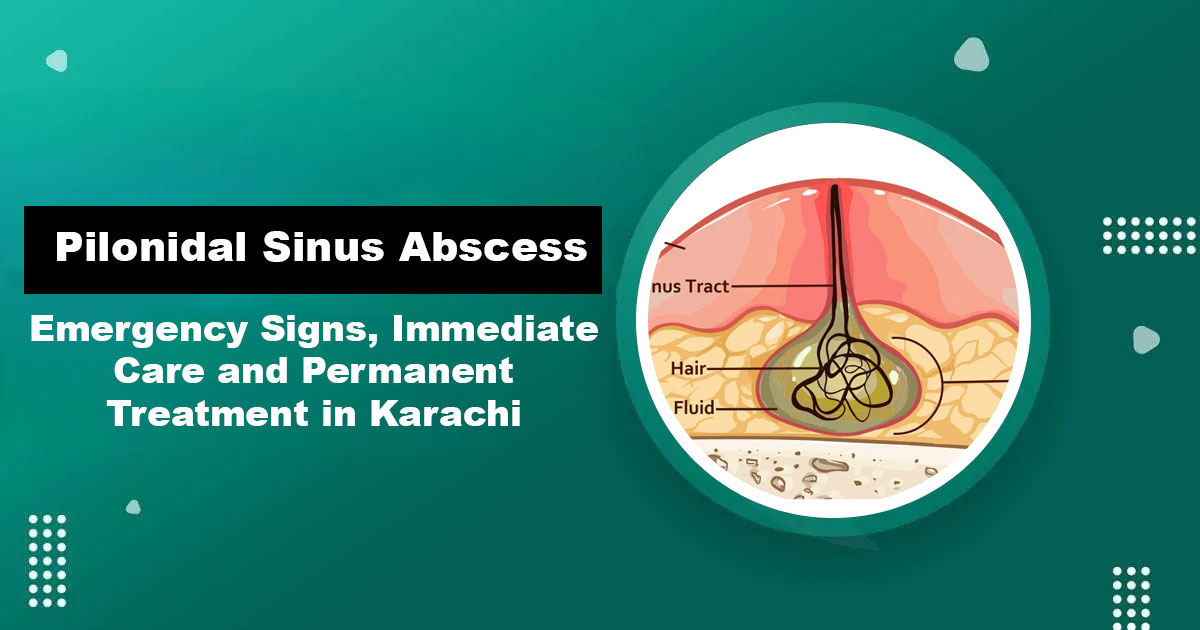

If you are reading this with a pilonidal sinus abscess — tailbone area throbbing, swollen, maybe pus draining — this article is for you. I see this situation at Karachi Piles Clinic almost every week. Acute pilonidal abscess. And the problem is most patients wait too long before coming in.
Let me tell you exactly what is happening in your body, when it becomes an emergency, and what the actual long-term solution is.
Abscess vs Pilonidal Sinus — What is the Difference?
These two are related but not the same thing. Pilonidal sinus is the underlying chronic condition — a small tunnel or pit near the tailbone that has hair and debris stuck in it. A pilonidal abscess is what happens when that sinus gets acutely infected — pus collects, pressure builds, and you get that intense throbbing pain.
Think of it this way. The sinus is the root cause. The abscess is the acute flare-up. Many patients only come to see me during an abscess episode. And that is actually fine — but they need to understand that draining the abscess alone is not the end of the problem.
Emergency Signs — When to Come Immediately
Go to a surgeon immediately if you have:
- Severe throbbing pain near the tailbone that is getting worse
- Fever above 38.5°C with localised swelling
- Red, hot, fluctuant swelling in the natal cleft area
- Pus draining spontaneously from a hole near the tailbone
- You cannot sit at all due to pain
These signs mean you have an acute abscess. It will not resolve on its own with antibiotics. You need surgical drainage.
What Happens at Karachi Piles Clinic
When you come in with an acute abscess, I do a quick examination. If it is fluctuant (the pus is ready to drain), we proceed with incision and drainage (I&D) on the same day.
I&D is done under local anaesthesia. A small incision is made, the pus is drained completely, the cavity is cleaned, and a small wick or drain is placed. Most patients feel immediate relief — the pressure that was causing that unbearable pain is gone within minutes.
In my experience, this takes about 15 to 20 minutes. You go home the same day.
But Here is the Important Part
I&D is not a cure. It is emergency relief. The underlying pilonidal sinus is still there. If you just drain the abscess and do nothing else, the sinus will refill, re-infect, and you will be back within weeks or months with the same problem.
I tell every patient this clearly. Drainage now, definitive surgery later. Once the acute infection settles — usually 6 to 8 weeks after drainage — we plan the proper procedure.
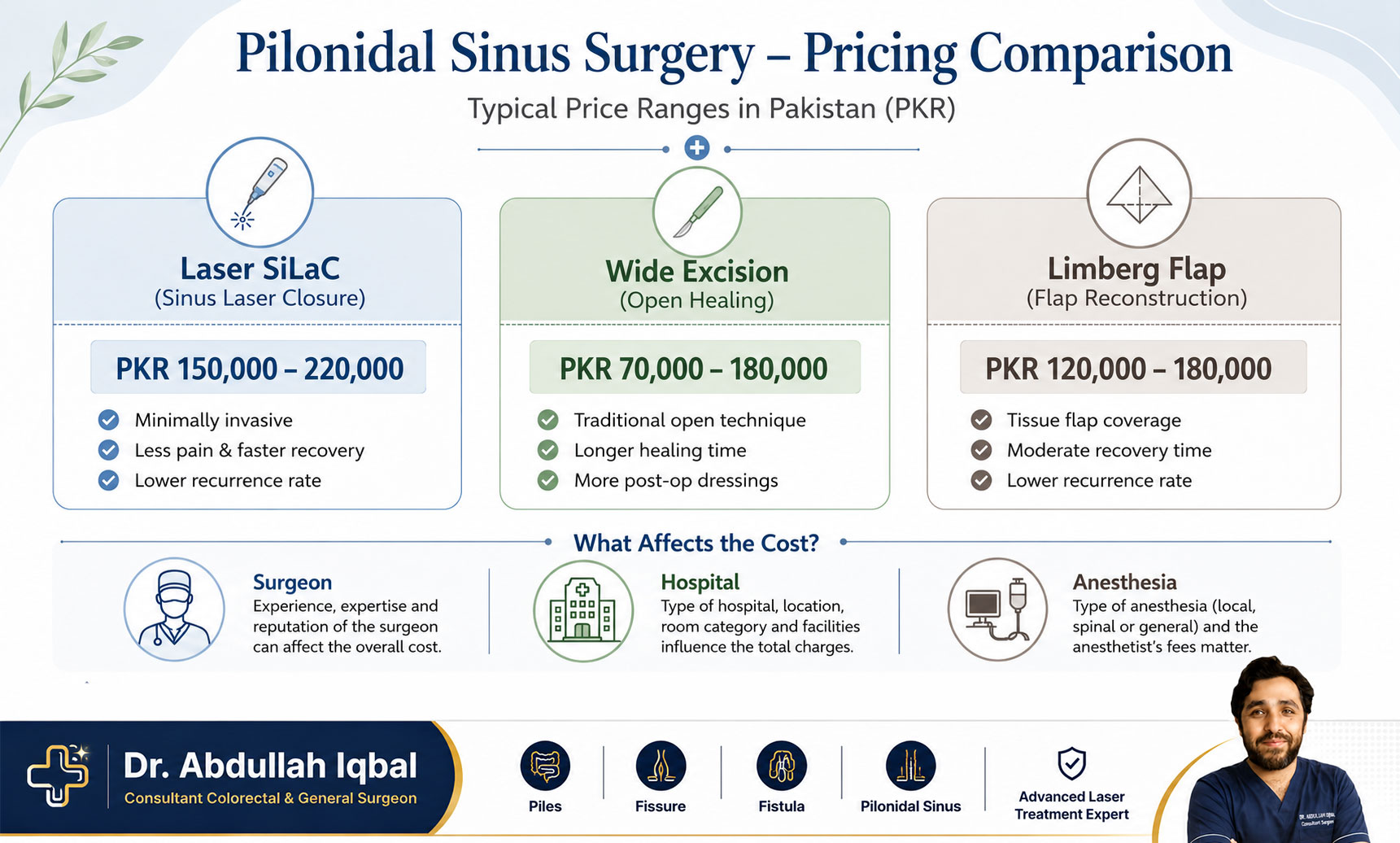
| Treatment | Purpose | Long-term fix? | Cost PKR |
|---|---|---|---|
| Incision & Drainage | Drain acute abscess, relieve pain | No | 30,000 – 60,000 |
| Laser Sinus Closure | Closes the sinus tract | Yes (after healing) | 150,000 – 180,000 |
| Limberg / Karydakis Flap | Definitive flap reconstruction | Yes (lowest recurrence) | 90,000 – 200,000 |
Can Antibiotics Alone Treat a Pilonidal Abscess?
Short answer — no. Not once the abscess is formed. Antibiotics are useful in the very early stages when there is cellulitis (spreading redness) without a formed pus collection. But once the abscess is there, it needs to be drained.
I have noticed that many patients take antibiotics for weeks before coming to see me. The antibiotics reduce the fever and make the pain slightly less, but the abscess is still sitting there. It just keeps smouldering.
Kya yeh aapke saath bhi hua? Antibiotic lete rahe aur problem wahi rahi?
After the Drainage — What Next?
After I&D, I give patients wound care instructions. The drainage site needs daily cleaning and dressing changes for about 2 to 3 weeks. Mostly this can be done at home or at a nearby clinic.
After the wound heals, we have a proper consultation to plan the definitive procedure. This is where I assess whether Laser Sinus Closure is suitable or whether a flap procedure is needed based on the size, complexity, and whether it is recurrent.
If you want to understand more about what happens after surgery, read my complete recovery guide. Also for young men who get pilonidal sinus frequently, read about why young men are most affected.
For context on the full range of anorectal conditions I treat, see fistula treatment which also involves similar abscess presentations.
You can also see the full pilonidal sinus treatment guide and symptoms in Urdu for your family to understand the condition.
Frequently Asked Questions
Is pilonidal sinus abscess an emergency?
Yes. A pilonidal abscess with fever, severe pain, and fluctuant swelling requires urgent surgical drainage. It will not resolve on its own with antibiotics once pus has formed.
Can antibiotics alone treat a pilonidal abscess?
No. Antibiotics reduce surrounding infection but once an abscess forms it must be surgically drained. Antibiotics alone will not clear the pus collection.
What is incision and drainage?
Incision and drainage is a minor procedure under local anaesthesia where the abscess is opened, pus drained, and the cavity cleaned. It gives immediate relief but is not a permanent cure.
After drainage what is the definitive treatment?
After the drainage wound heals in 6 to 8 weeks, definitive surgery is planned — Laser Sinus Closure or flap procedures like Limberg or Karydakis at Karachi Piles Clinic.
Come to Karachi Piles Clinic — we handle pilonidal abscess emergencies and plan definitive treatment properly.
Related reading
- Why Does Pilonidal Sinus Keep Coming Back? Recurrence Causes and Long-Term Solutions
- Pilonidal Sinus in Young Men — Why It Happens and How to Treat It in Karachi
- Pilonidal Sinus Ka Ilaj: Surgery ya Laser Therapy?
- Pilonidal Cyst Kya Hai? Iski Wajohaat aur Alamaat
- Pilonidal Sinus Recovery Guide — Complete Aftercare After Laser and Flap Surgery
- pilonidal sinus specialist
- Fistula treatment in Karachi
- Consult Dr. Abdullah Iqbal

- Fissure Cream vs Laser Treatment — Which One Actually Works? - June 29, 2026
- Fissure During Pregnancy — Safe Treatment Options and What to Avoid - June 22, 2026
- Going to the Washroom with Fissure — 7 Tips That Actually Reduce Pain - June 15, 2026
