

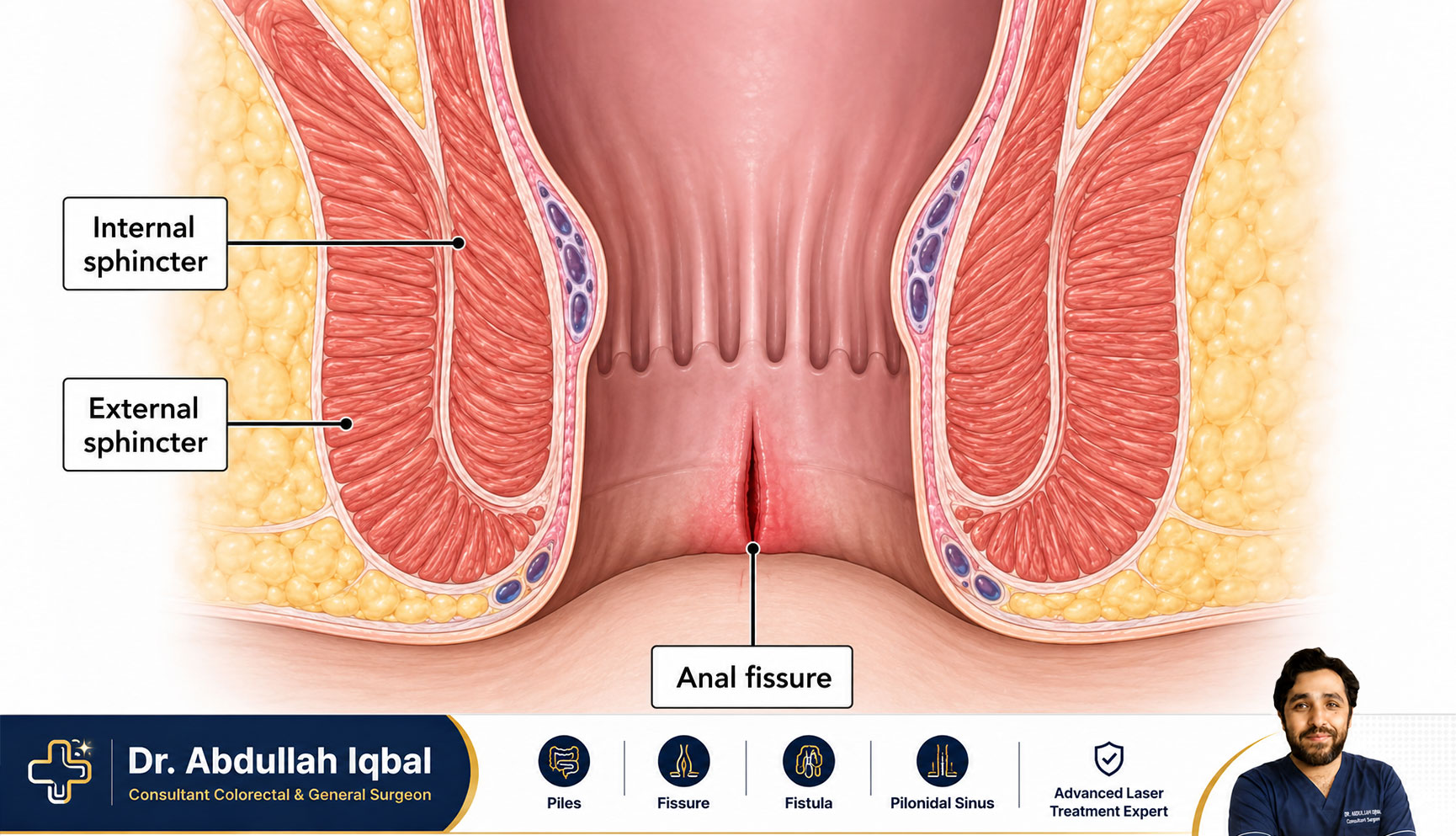
Pregnancy brings many changes to a woman’s body, and unfortunately, anal fissure is one condition that becomes more common during this time. In my practice, I regularly see pregnant women and new mothers who are dealing with fissure pain on top of everything else pregnancy demands. The good news is that in most cases, fissure during pregnancy can be managed safely without surgery.
I want to address this topic clearly because I have seen too many women suffer in silence — sharm ki wajah se kisi se baat nahi karti hain, even with their own doctor. There is nothing to be embarrassed about. Fissure in pregnancy is extremely common and completely treatable.
Why Do Fissures Happen During Pregnancy?
There are three main reasons I see fissure develop in pregnant women:
1. Constipation: Pregnancy hormones — especially progesterone — slow down the digestive system. This leads to harder stool, which causes tears during bowel movements. According to the NHS UK, up to 40% of pregnant women experience constipation at some point during pregnancy.
2. Iron supplements: Most pregnant women take iron tablets, which are notorious for causing constipation. I advise patients to discuss with their gynecologist about switching to a liquid iron supplement or adjusting the dose if constipation becomes severe.
3. Pressure during delivery: Vaginal delivery puts enormous pressure on the perineal and anal area. Many women develop fissures during or immediately after delivery. Delivery ke baad fissure hona bilkul normal hai — and it is treatable.
Safe Treatment Options During Pregnancy
In my opinion, the treatment approach during pregnancy should always start conservative. Here is what I recommend to my patients:
1. Dietary Changes — The First Line of Defence
This is the safest and most effective starting point. I strongly suggest:
• Eat high-fiber foods: papaya, banana, oats, daal, leafy vegetables
• Drink 10-12 glasses of water daily (more than the usual 8)
• Ispaghol (psyllium husk) is safe during pregnancy — one tablespoon at night
• Avoid maida (refined flour), fast food, and processed snacks
2. Sitz Baths — Safe and Effective
Warm sitz baths are completely safe during all trimesters. I advise 2-3 times daily, 10-15 minutes each. The warm water relaxes the sphincter muscle and promotes healing. Garam paani mein bethna maa aur baby dono ke liye safe hai.
3. Topical Ointments — With Doctor’s Approval Only
Some topical creams containing lidocaine or glyceryl trinitrate (GTN) can be used during pregnancy, but only under medical supervision. I have seen patients who buy random pharmacy creams without prescription — this is risky during pregnancy. Always check with both your surgeon and gynecologist before using any medication.
4. Stool Softeners
Lactulose syrup is generally considered safe during pregnancy and can help soften stool significantly. Again, take it only after your doctor’s recommendation.
What About Surgery During Pregnancy?
I strongly advise against any elective surgery during pregnancy. Laser fissure treatment is a very safe procedure, but it still requires anaesthesia, which carries risk for the baby. In my experience, conservative treatment manages the condition effectively during pregnancy, and if surgery is needed, it can be safely done 6-8 weeks after delivery once the body has recovered.
The only exception would be a severe, complicated case with abscess formation — but this is extremely rare.
Fissure After Delivery — When to Act
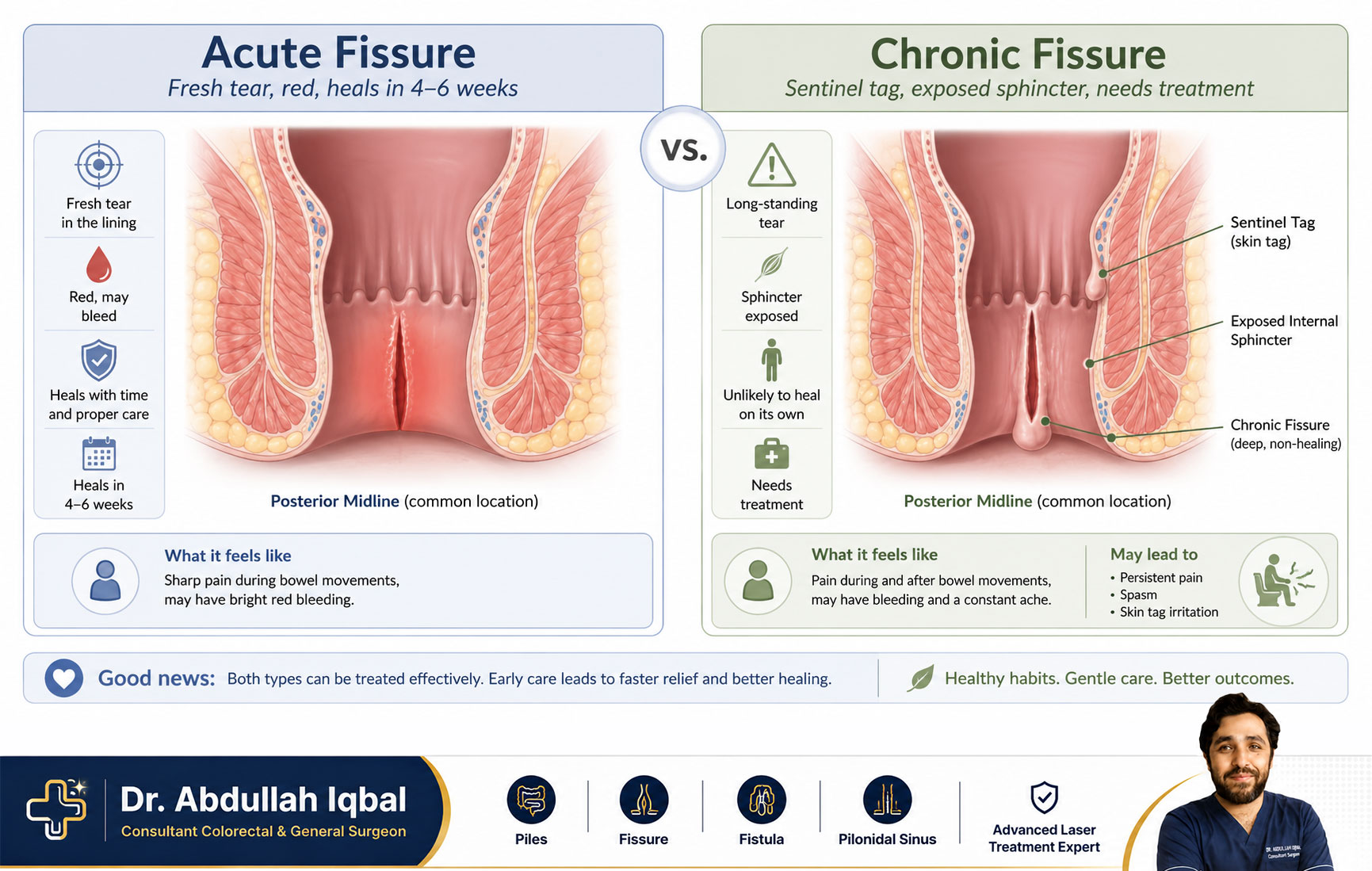
Many women develop fissure during delivery itself, especially after prolonged labour. If you notice sharp pain or bleeding after delivery, do not assume it is just part of post-delivery recovery. Get checked by a specialist. If the fissure does not heal within 6-8 weeks postpartum, laser treatment can be done safely — it takes only 10-15 minutes and you can return to caring for your baby the same day.
Can Fissure Affect My Baby?
I get asked this often. The fissure itself does not affect the baby at all. However, chronic pain and stress from untreated fissure can affect your overall well-being, sleep, and nutrition during pregnancy. This is why I strongly suggest getting proper treatment early rather than suffering through it.
Similarly, an untreated fissure that progresses to a fistula (which is rare but possible) would be a more serious concern. Early management prevents complications.
Related Reading
• Fissure Meaning in Urdu — Aur Piles Se Farq
• 5 Simple Home Treatments for Anal Fissure
• Washroom Tips to Reduce Fissure Pain
• Piles During Pregnancy — Treatment Guide
Frequently Asked Questions
Pregnancy mein fissure se pareshaan hain? Expert advice lein.
Dr. Abdullah Iqbal — Pakistan’s First Laser Proctologist

- Fissure Cream vs Laser Treatment — Which One Actually Works? - June 29, 2026
- Fissure During Pregnancy — Safe Treatment Options and What to Avoid - June 22, 2026
- Going to the Washroom with Fissure — 7 Tips That Actually Reduce Pain - June 15, 2026
