

Diet aur piles ka rishta bahut gehra hai. I always tell my patients at Karachi Piles Clinic — jo aap kha rahe hain woh directly affect karta hai ke aapki bawaseer behtar hogi ya worse hogi. Most people know what NOT to eat. But nobody really talks about what TO eat. So today I want to fix that.
Knowing the right piles food to eat can make a significant difference in symptoms and recovery.
This is not a complicated diet plan. It is simple, practical, affordable — aur Karachi ke ghar mein easily available cheezein hain yahan. Let me share what I recommend to my own patients.
Sabse Pehle — Fiber Ki Baat
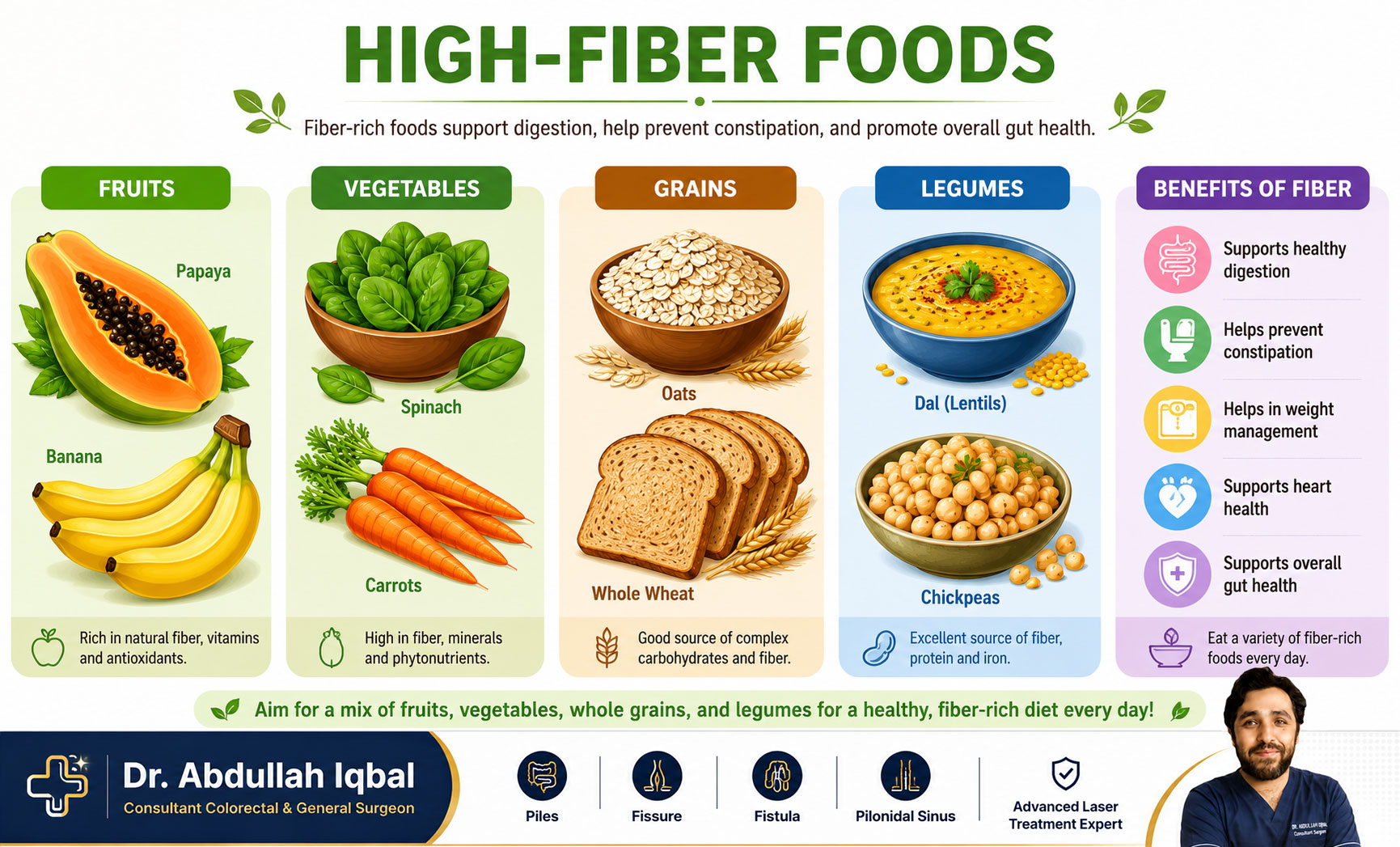
Fiber is the single most important nutrient for piles patients. It absorbs water, makes stool soft and bulky, and helps it pass without straining. I recommend 25-30 grams of fiber per day for my piles patients.
The problem I see in Karachi? Most people eat maybe 8-10 grams daily. White rice, naan, biscuits, processed food — these have almost zero fiber. So the first change I ask every patient to make is to add fiber-rich foods intentionally.
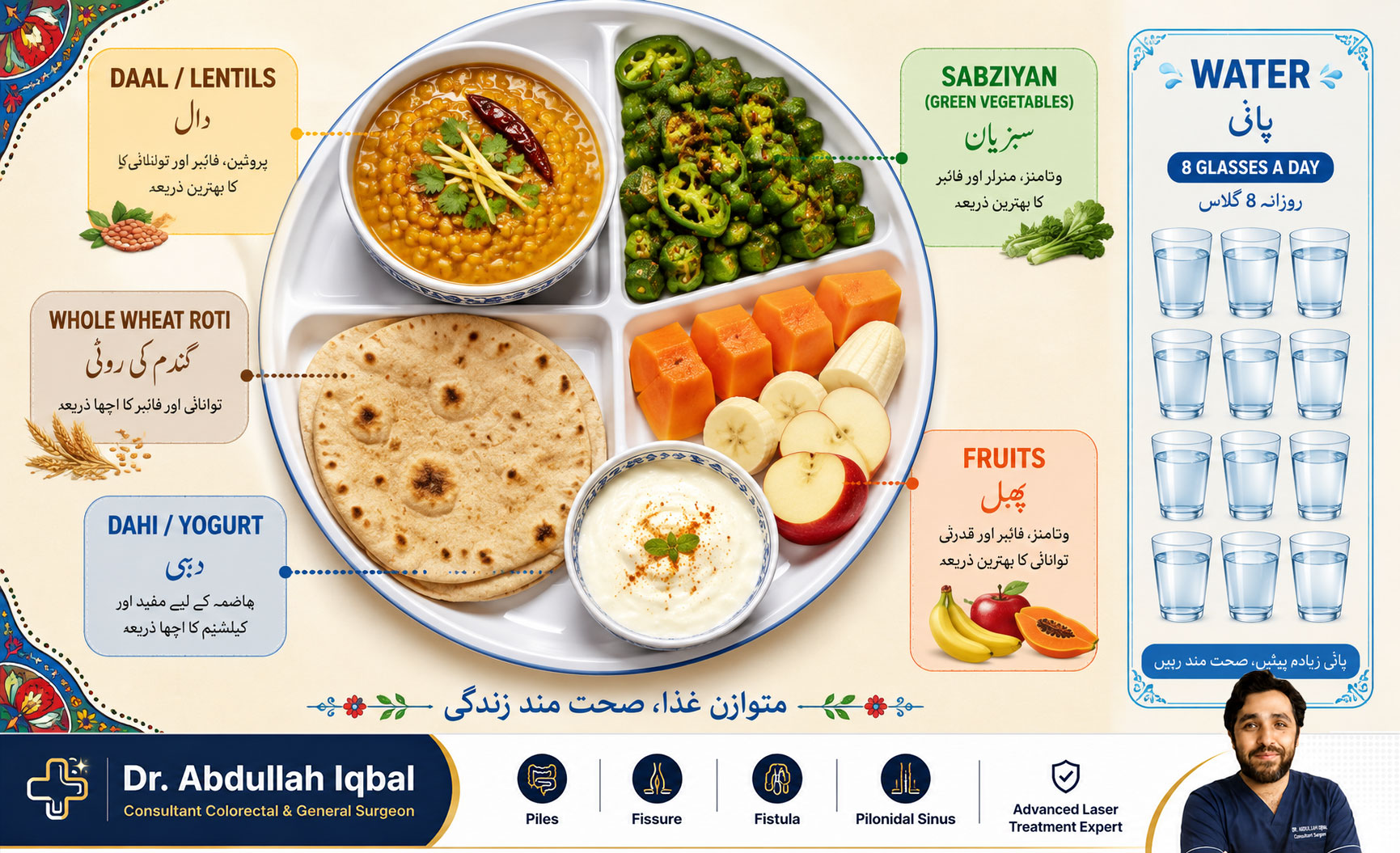
Top Foods for Piles Patients — My Personal List
Isabgol (Psyllium Husk) — This is my number one recommendation. One teaspoon in a glass of water, twice daily. It is the most reliable, fastest-acting fiber supplement available in Pakistan. Cheap, widely available, and it genuinely works. If you do nothing else — at least start isabgol.
Papaya — Papita is excellent for piles. It has natural enzymes (papain) that aid digestion and it is a decent fiber source. Also has softening effect on stool. I tell patients to have half a papaya in the morning on an empty stomach. Simple habit that makes a real difference.
Daal (Lentils) — All types of daal — masoor, moong, chana — are high in fiber and protein. Easy to digest when cooked properly. A bowl of daal with roti is actually an excellent meal for a piles patient. We already eat this — just need to make it a priority.
Sabziyan (Vegetables) — Bhindi, palak, gajar, peas, broccoli. All are excellent fiber sources. Boiled or lightly cooked vegetables are best. Deep fried vegetables lose most of their benefit.
Oats — Oatmeal for breakfast is very helpful. It is soluble fiber which forms a gel in the gut and makes stool easier to pass. Bland taste can be improved with honey or a banana.
Aloo Bukhara (Prunes) — Dried or fresh prunes are nature’s stool softener. I sometimes recommend 4-5 prunes daily to patients with stubborn constipation alongside piles. Works very well.
Brown Bread / Whole Wheat Roti — Switching from white flour to whole wheat makes a significant difference in fiber intake over time. It does not need to be dramatic — just replacing one meal daily with whole grain starts the improvement.
Fruits That Help — Aur Kitne Khayein
Fruits in general are excellent for piles because they combine fiber with water content. My top recommendations:
- Papaya — best choice, especially morning
- Banana — easy on the gut, mild fiber
- Pear — high fiber especially in the skin
- Apple — eat with skin for maximum fiber
- Grapes — natural laxative effect
- Kiwi — excellent for constipation
Kya aap rozana ek ya do fruit kha lete hain? Yeh ek simple habit hai jo piles mein genuinely help karti hai. Agar nahi kha rahe toh shuru karein.
Pani — Jitna Zaroori Hai, Utna Hi Important
I cannot talk about diet for piles without talking about water. Fiber without water actually makes things worse — it can cause harder stool if you do not drink enough. The fiber absorbs water to do its job. So:
8-10 glasses of plain water daily. Not chai, not juice — plain water. In Karachi’s heat, maybe even more in summer months.
Tea and coffee actually have a mild diuretic effect — they can cause dehydration if not balanced with adequate water intake. So please do not count chai as your water intake for the day.
Quick Comparison — Good vs Not Good for Piles
| Good for Piles | Avoid or Limit |
|---|---|
| Isabgol, oats, brown bread | White rice, maida, biscuits |
| Daal, sabziyan, papaya | Deep fried food, fast food |
| 8-10 glasses plain water | Excess tea, coffee, carbonated drinks |
| Prunes, pears, kiwi | Excess red chili, spicy curries |
| Yogurt / dahi (probiotics) | Processed meats, heavy red meat daily |
For a full detailed list of what to avoid, I have a separate article on foods to avoid for piles and fissures. And we also have a free diet plan PDF you can download.
Frequently Asked Questions
Piles mein sabse faida mand food kya hai?
Isabgol (psyllium husk) number one hai. Saath mein papaya, daal, sabziyan, oats, aur aloo bukhara. These are all high-fiber, easily available in Pakistan, and directly help soften stool and reduce straining.
Piles mein pani kitna peena chahiye?
Minimum 8-10 glasses of plain water daily. In Karachi’s summer, more. Water makes fiber work properly and prevents stool from becoming hard. Chai and juice do not count as water intake.
Kya dahi piles mein mufeed hai?
Haan — dahi mein probiotics hote hain jo gut health improve karte hain. Healthy gut bacteria better digestion aur bowel regularity mein help karte hain, jo piles patients ke liye beneficial hai.
Isabgol kaise lein piles mein?
Ek se do chamach ek glass thande ya normal pani mein mix karein, foran pee lein. Roz subah khali pait aur raat ko sone se pehle. Kaafi paani saath peeyein otherwise yeh contraproductive ho sakta hai.
Diet changes alone may not be enough if your piles are Grade 2 or above. But combined with proper treatment, they dramatically reduce symptoms and prevent recurrence. Come see us at Karachi Piles Clinic for a proper assessment. Read more about hemorrhoids treatment in Karachi.
Related reading
- Difference Between Piles, Fissure and Fistula — Complete Comparison
- Anal Bleeding: 6 Asal Wajahen Jo Aapko Pata Hona Zaruri Hai
- Piles Grades 1 to 4 — Aapki Bawaseer Kaunse Stage Mein Hai?
- Piles Kyun Hoti Hai — 10 Main Wajuhat Aur Bachao Ke Tareeqay
- Piles Ki Alamat in English — Early Signs Jo Aapko Pata Honi Chahiye
- Pakistan’s first laser proctologist
- Anal fissure laser treatment
- Fistula treatment
- Book an appointment

- Fissure Cream vs Laser Treatment — Which One Actually Works? - June 29, 2026
- Fissure During Pregnancy — Safe Treatment Options and What to Avoid - June 22, 2026
- Going to the Washroom with Fissure — 7 Tips That Actually Reduce Pain - June 15, 2026
