

One thing I have learned after years of treating piles at Karachi Piles Clinic is that patients who come early have much better outcomes. Much simpler treatment. Much faster recovery. But they only come early if they recognize the signs early. That is exactly why I am writing this.
Recognizing the early signs of piles is the key to getting treatment before the condition worsens.
Piles ki early signs — woh nishaniyan jo shuruat mein aati hain — often get dismissed or ignored. Main chahta hun ke aap unhe pehchan sakein.
Sign Number 1 — Bright Red Blood on Tissue Paper
This is almost always the first sign patients notice. After passing stool, bright red blood on the tissue paper or in the toilet bowl. Not dark blood, not mixed in the stool — bright red, on the surface.
Most patients ignore this at first. “Ek baar hua tha, phir theek ho gaya.” But if it keeps happening — even occasionally — that is your body telling you something. In my experience, intermittent rectal bleeding that comes and goes is very characteristic of early Grade 1-2 piles.
Important reminder: any rectal bleeding should be evaluated by a doctor at least once. Do not assume. Colorectal cancer also bleeds — and it is the overlap that makes diagnosis essential.
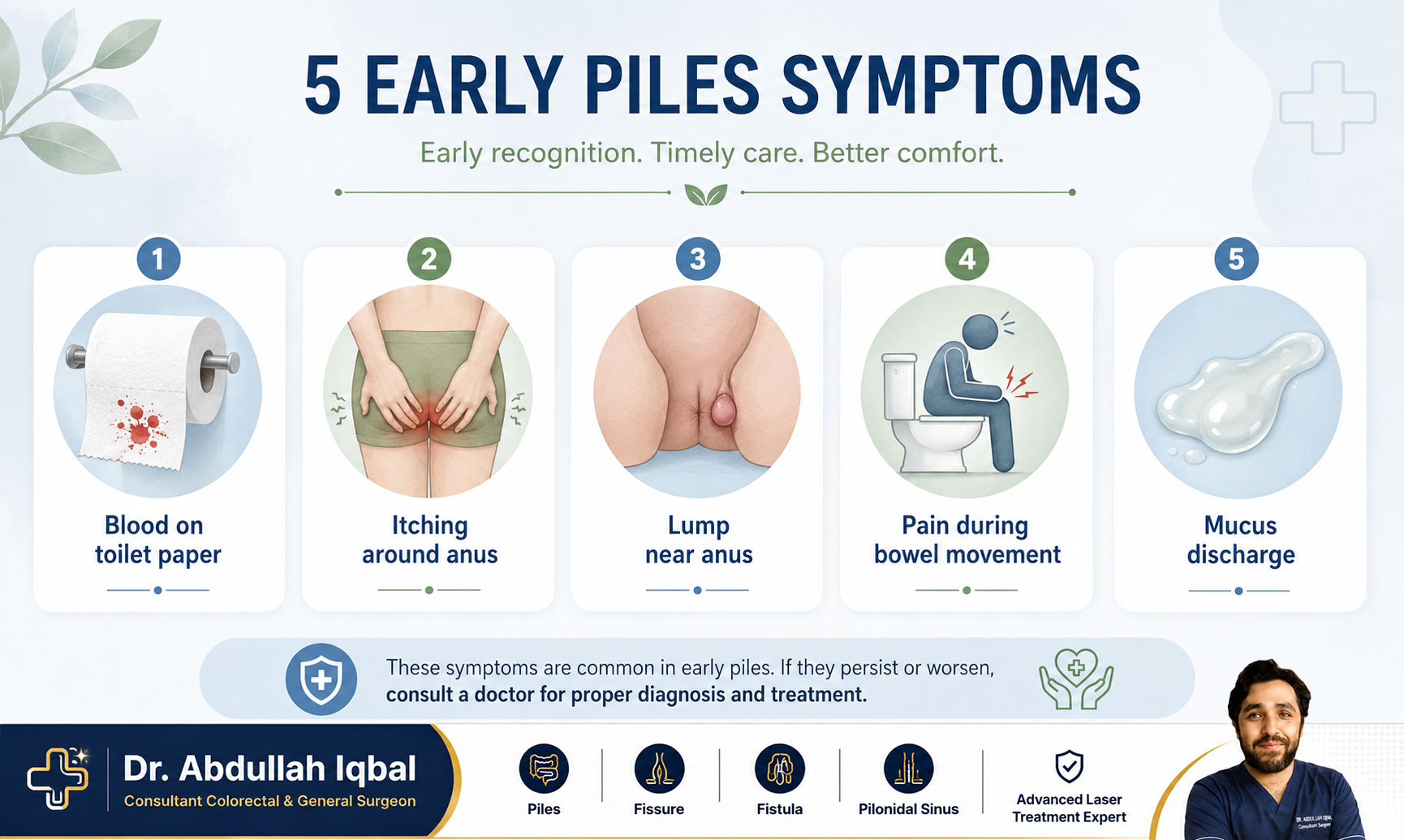
Sign Number 2 — Anal Itching and Discomfort
Persistent itching or irritation around the anal area is a very common early sign. It is caused by mucus secretion from swollen internal hemorrhoids or by the skin tags that sometimes form around external piles.
People often feel embarrassed about this symptom. But it is very common and very treatable. Scratching makes it worse — it irritates the skin further. Keeping the area clean and dry, and avoiding harsh wiping, helps temporarily. But the underlying cause needs treatment.
Sign Number 3 — Discomfort or Fullness After Bowel Movement
Early internal piles often create a sensation of something remaining inside even after passing stool completely. Or a dull heaviness in the anal area. Not sharp pain — more of a pressure, fullness, or vague discomfort.
Kya aapko bhi aisa lagta hai ke pakhana poora nahi aaya? Ya uss area mein ek heaviness rehti hai? Yeh early piles ki ek sign ho sakti hai. Isko miss karna aasan hai kyunke yeh dramatic nahi hoti — lekin note karna zaroori hai.
Sign Number 4 — Small Lump Near the Anus
In early external piles, a small, soft lump appears near the opening of the anus. It may not be painful initially. Some patients notice it while cleaning, others feel it while sitting. It may be more noticeable after bowel movements and then seem to reduce.
This is Grade 2 presenting itself. Do not ignore a new lump in this area — ever. Get it examined.
Sign Number 5 — Increased Discomfort While Sitting
This is often noticed first by office workers or people who sit for long hours. A persistent mild discomfort while sitting, especially on hard chairs. It is the external piles or prolapsed internal piles being pressed against the chair that causes this.
How Piles Feel Like — Textures and Sensations
Patients often ask me to describe the sensation so they can recognize it. Here is my honest description:
Internal piles early stage: you often feel nothing in terms of pain — just blood. Maybe a vague fullness. Nothing dramatic. This is why they get ignored so often.
External piles early: a soft, smooth lump. Not rock hard. Tender if pressed. May feel like a small grape under the skin near the anus. Gets more prominent after bowel movements.
Prolapsing piles: a feeling of something bulging out during straining, then going back in. Sometimes accompanied by a mucus discharge on underwear.
When To See A Doctor Immediately
Early signs are manageable. But see a doctor without any delay if:
- Bleeding is heavy or does not stop
- Severe pain suddenly develops
- A lump becomes very painful and dark/bluish
- You are over 45 and have new rectal bleeding
- Unexplained weight loss accompanies the symptoms
Frequently Asked Questions
What are the earliest signs of piles?
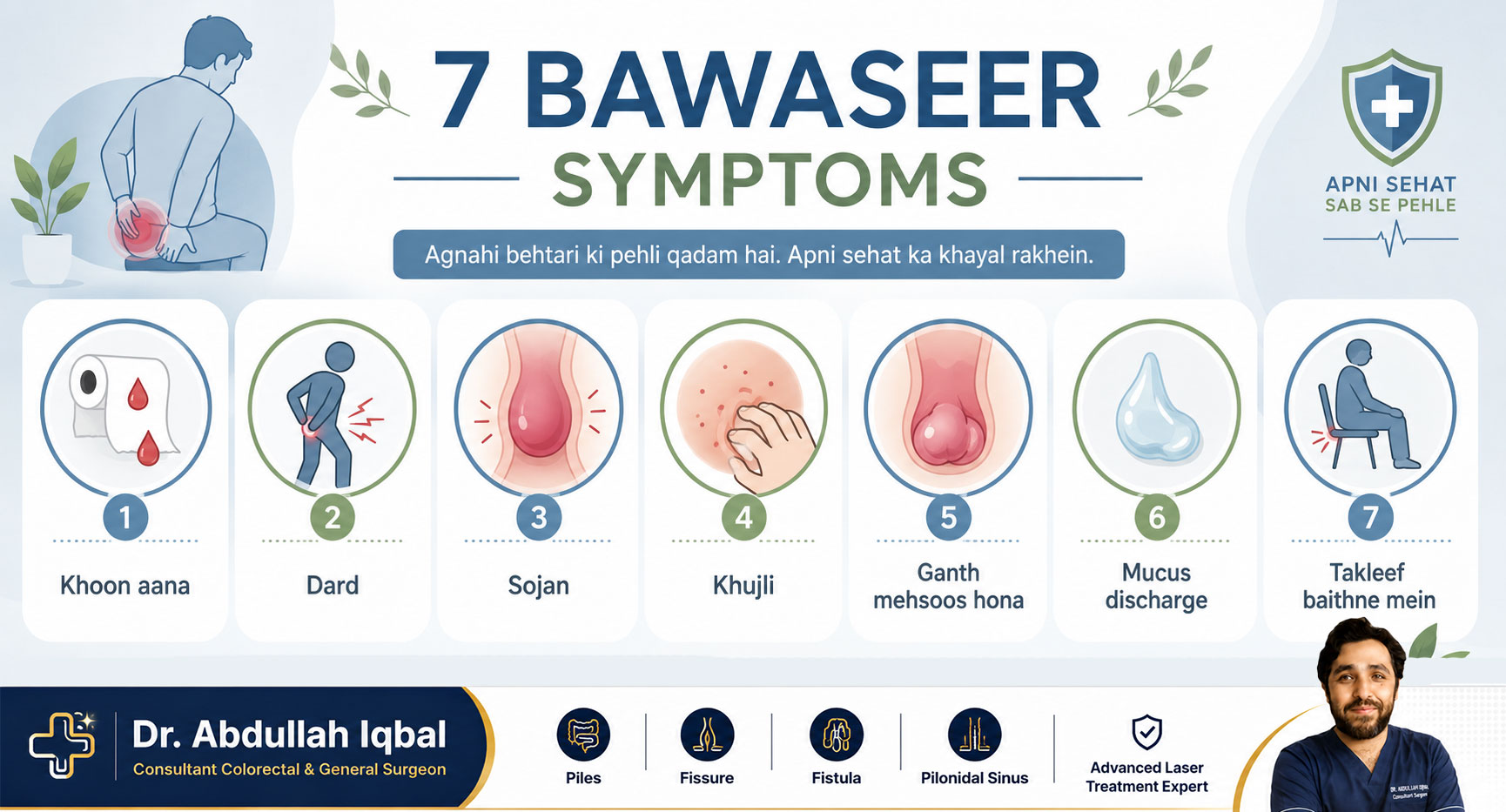
Bright red blood on tissue paper after passing stool, anal itching, vague fullness or discomfort after bowel movements, and a small soft lump near the anus are the most common early signs of piles.
How do piles feel like in the early stage?
Internal piles early stage: often no pain, just occasional bleeding. External piles: a soft, smooth, tender lump near the anus. Prolapsing piles: something bulging out during straining that goes back in.
Piles ki alamat kitne din mein dikhai deti hain?
Piles develop gradually over weeks to months. There is no fixed timeline. Chronic constipation, poor diet, and sedentary lifestyle accelerate their development. Sudden onset usually means an acute thrombosed external hemorrhoid.
Do piles always bleed?
No — not always. External piles may cause pain and lump without significant bleeding. Internal piles typically bleed but may not cause pain. Some patients have both symptoms, some have neither initially.
Piles symptoms in English vs symptoms in female — kya farq hai?
Symptoms are anatomically the same in males and females. However, women during pregnancy may experience more rapid progression due to uterine pressure. Postpartum women often develop new piles after delivery.
Recognizing early signs is the first step. The next step is doing something about it. Visit Karachi Piles Clinic for a proper assessment, or read more about piles grades to understand the progression. Early treatment is always simpler, faster and cheaper.
Related reading
- Maqad Ke Skin Tag: Pesh Raaiye Aur Ilaj
- Piles Without Surgery — Non-Surgical Treatment Options in Karachi
- Piles Cure in 3 Days: What You Need to Know
- Can Piles Cause Cancer? Bawaseer Se Cancer Ho Sakta Hai?
- Piles Mein Kya Khayen — Best Foods Jo Bawaseer Mein Faida Dete Hain
- piles doctor in Karachi
- Anal fissure laser treatment
- Fistula treatment
- Schedule your visit

- Fissure Cream vs Laser Treatment — Which One Actually Works? - June 29, 2026
- Fissure During Pregnancy — Safe Treatment Options and What to Avoid - June 22, 2026
- Going to the Washroom with Fissure — 7 Tips That Actually Reduce Pain - June 15, 2026
