
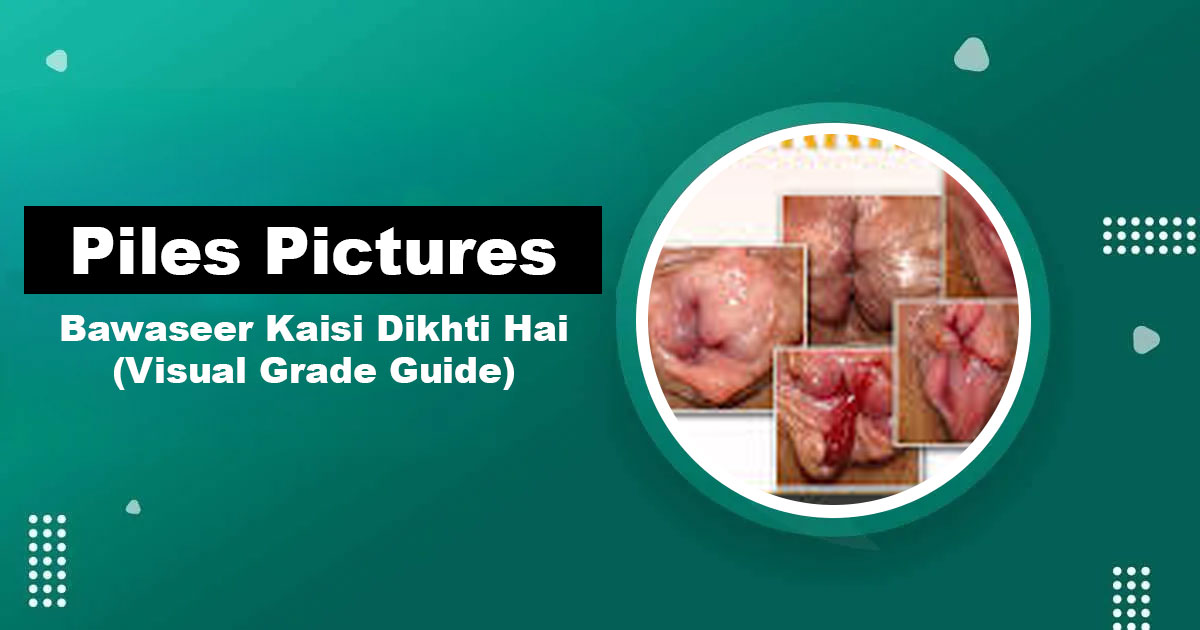

One of the first things patients ask me when they come to Karachi Piles Clinic is — “Doctor, kya yeh wahi hain jo main soch raha hun?” People are confused. They search online and find scary images that do not really explain anything. So I want to give you a clear, honest visual guide — bawaseer kaisi dikhti hai, grade by grade.
I will describe exactly what each type looks like. This is not to embarrass anyone — it is to help you understand your own body. And maybe, finally, take the right action.
Internal vs External Piles — Farq Samajhein
Before we talk about what piles look like, you need to understand there are two main types. Internal piles are inside the anal canal — you cannot see them from the outside. External piles are outside or at the opening of the anus — you can see and feel them.
Most people who ask “how do piles look” are thinking about external piles. But in my practice, I actually see a lot of internal piles too — which present only with bleeding, no visible swelling.
Internal Piles — Andar Se Kaisi Dikhti Hain
Internal piles — honestly you cannot see these yourself without special instruments. What you will notice is:
- Bright red blood on toilet paper after passing stool
- In Grade 2-3, you might feel something bulging out temporarily
- Mucus discharge sometimes
- A feeling of incomplete evacuation
When I examine internal piles with a proctoscope, they look like reddish-pink soft swellings inside the anal canal — like small cushions of tissue that have become enlarged. They are typically at 3, 7, and 11 o’clock positions, if that makes sense.
Kya aapko pakhane ke baad sirf khoon aata hai? Koi dard nahi hota? Yeh often internal piles hain. Toh kya aapke saath bhi yahi ho raha hai?
External Piles — Bahar Se Kaisi Dikhti Hain
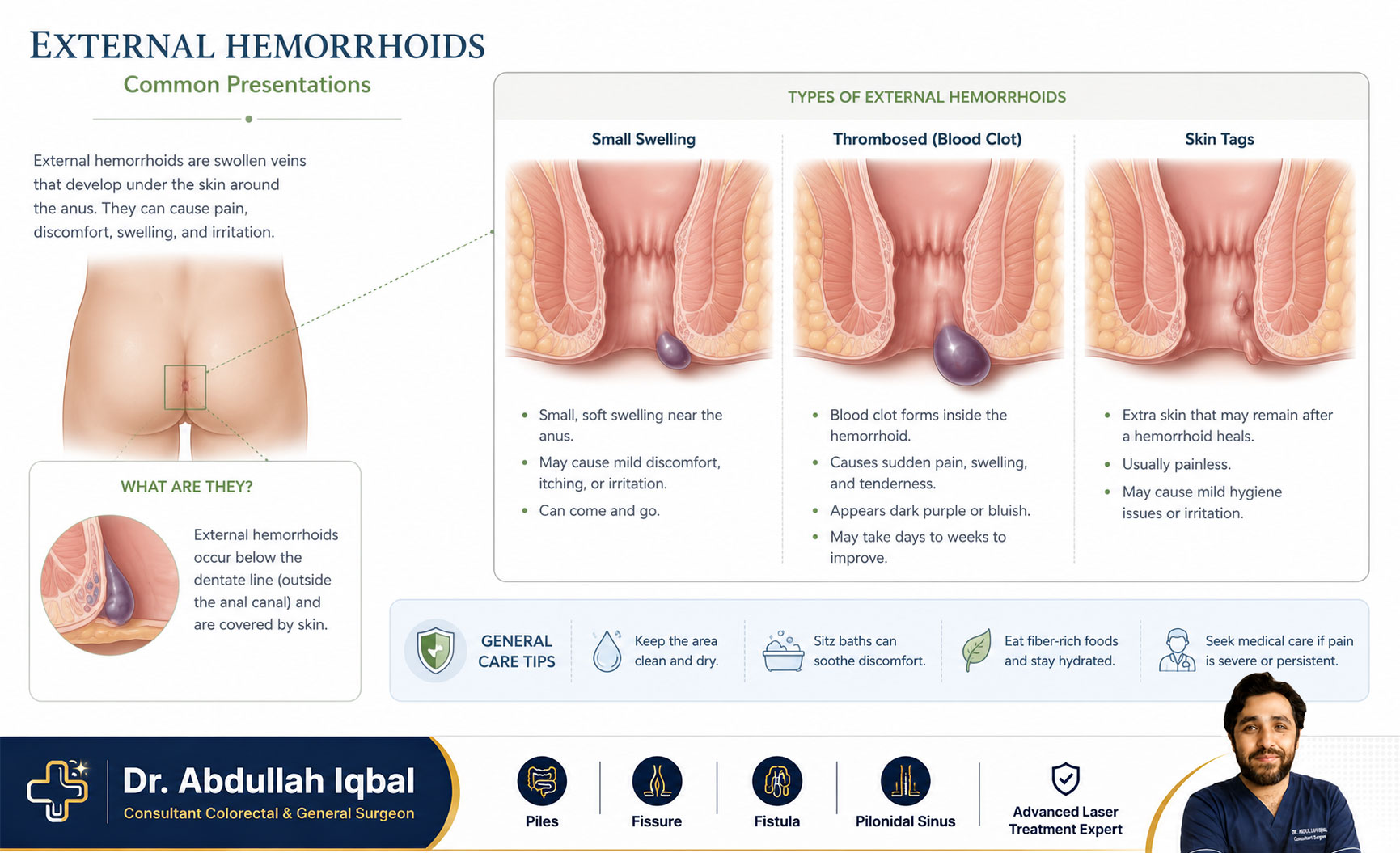
This is what most people picture. External piles appear as soft lumps around the outside of the anus. Here is what to look for:
In mild cases, they look like small skin-colored or slightly reddish soft bumps — sometimes only noticeable when you strain or after bowel movement. They may feel tender when touched.
In more advanced cases, they become larger, more prominent, and may appear dark purple or bluish — this usually means there is thrombosis (blood clot inside). This is the painful stage. I see patients who can barely sit because of thrombosed external hemorrhoids.
Piles Ke Stages — Grade By Grade Appearance
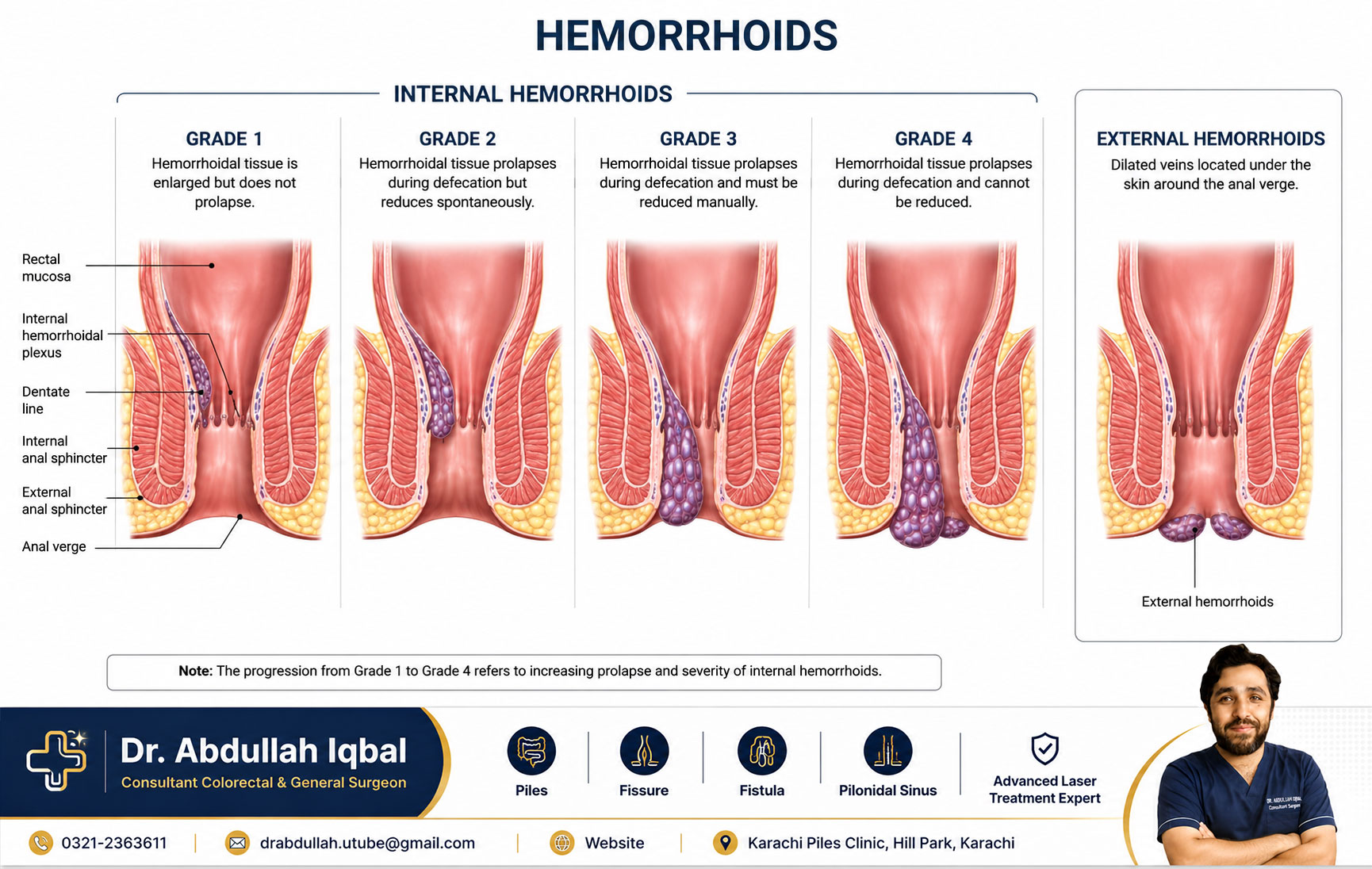
Here is how piles look at different grades, in simple terms:
| Grade | What You See | What You Feel |
|---|---|---|
| Grade 1 | Nothing visible externally | Blood only, maybe mild itching |
| Grade 2 | Small tissue protrusion during straining, goes back | Prolapse sensation, discomfort |
| Grade 3 | Visible prolapse needing manual reduction | Pain, bleeding, heaviness |
| Grade 4 | Permanent prolapse, cannot be reduced | Severe pain, especially if thrombosed |
Piles in Female — Kya Alag Dikhti Hain?
This question comes up a lot, specially from female patients. My answer — no, piles in females look exactly the same as in males anatomically. Same types, same grades, same appearance.
However, what is different is the context. Women during pregnancy and after delivery are much more prone to piles. I have had patients who developed severe Grade 3 piles after their second delivery and were never told this was even possible. The appearance is the same but the cause and timing can differ.
Also sometimes in female patients I see piles confused with other conditions — like skin tags near the anal area, or even prolapse of other structures. This is exactly why a proper examination matters rather than self-diagnosis based on pictures alone.
How to Tell If It Is Piles or Something Else
Patients sometimes worry. “Doctor, yeh piles hai ya kuch aur?” Let me help you distinguish:
Piles vs skin tags: Skin tags are flat, soft folds of skin around the anus. They are usually painless, no bleeding, and do not go away. They are benign but can be removed. Piles, on the other hand, are vascular tissue — they can bleed, prolapse, and cause more symptoms.
Piles vs fissure: Fissure is a tear in the skin of the anus. You will not see a lump — you will see a cut. The pain with fissure is usually sharp, burning, and comes during and after passing stool. Very different feeling from piles. I have written separately about fissure in detail.
Piles vs abscess: An abscess looks red, swollen, hot, and is extremely painful. Different from typical piles appearance.
When Should You Come See Me?
Honestly, if you are reading this article and thinking “yeh mujhse match karta hai” — that is enough reason to book an appointment. I do not believe in waiting. Especially if you have:
- Any rectal bleeding, even small amounts
- A visible lump or swelling around the anus
- Persistent itching or discomfort
- Something coming out during bowel movements
You can also try our self-diagnosis tool as a starting point. But remember — it is not a substitute for a clinical examination.
Frequently Asked Questions
Piles bahar se kaisi dikhti hain?
External piles maqad ke bahar soft ganthaan ki tarah dikhti hain — skin-colored ya reddish. Agar dark purple ya blue hain toh thrombosis ho sakta hai jo zyada dardnaak hota hai.
Internal piles dikhai nahi deti — sach hai?
Haan bilkul. Internal piles andar hoti hain — sirf bleeding ya prolapse se pata chalta hai. Proper diagnosis ke liye proctoscopy zaroori hai.
Piles aur skin tag mein kya farq hai?
Skin tags flat soft folds hoti hain — koi bleeding nahi, koi prolapse nahi. Piles phuli hoi vascular tissue hoti hain jo bleed kar sakti hain aur bahar aa sakti hain.
How piles look like in female?
Piles in female look exactly the same as in males anatomically. Same grades, same appearance. However, women are more prone during pregnancy and after delivery.
Any more questions? Reach out through our contact page or visit us at Karachi Piles Clinic. We are here Tuesday, Thursday & Saturday, 5 PM to 8 PM.
Related reading
- Khawateen Mein Bawaseer — Pregnancy, Delivery Ke Baad Aur Umar Ke Saath
- Difference Between Piles, Fissure and Fistula — Complete Comparison
- Piles Cure in 3 Days: What You Need to Know
- Daflon Tablets: Uses and Dosage Guide
- Bawaseer Ki Alamat — 7 Nishaniyan Jo Ignore Na Karein
- Dr. Abdullah Iqbal, laser proctologist
- Anal fissure laser treatment
- Fistula treatment
- Consult Dr. Abdullah Iqbal

- Fissure Cream vs Laser Treatment — Which One Actually Works? - June 29, 2026
- Fissure During Pregnancy — Safe Treatment Options and What to Avoid - June 22, 2026
- Going to the Washroom with Fissure — 7 Tips That Actually Reduce Pain - June 15, 2026
