

This is a topic I feel strongly about. Because in my years of practice at Karachi Piles Clinic, I have noticed that women suffer in silence more than men when it comes to piles. There is embarrassment, there is hesitation, and honestly — there is a lack of awareness that piles in women is extremely common. So let me talk about it openly.
The condition of women with piles is more common than most people realize — and completely treatable.
Khawateen mein bawaseer — pregnancy ke doran, delivery ke baad, aur umar ke saath — yeh sab hota hai. And it is very treatable. You do not have to suffer.
Women With Piles — How Common Is It Really?
Very common. Studies suggest that up to 50% of people develop piles at some point in their life, and women are certainly not protected from this. In fact, certain phases of a woman’s life — especially pregnancy and the postpartum period — make them significantly more vulnerable than men of the same age.
I see female patients regularly at my clinic. Some have had piles for years before seeking help because they felt too embarrassed. My message to all women reading this: there is absolutely nothing embarrassing about this condition. It is medical, it is common, and it is treatable.
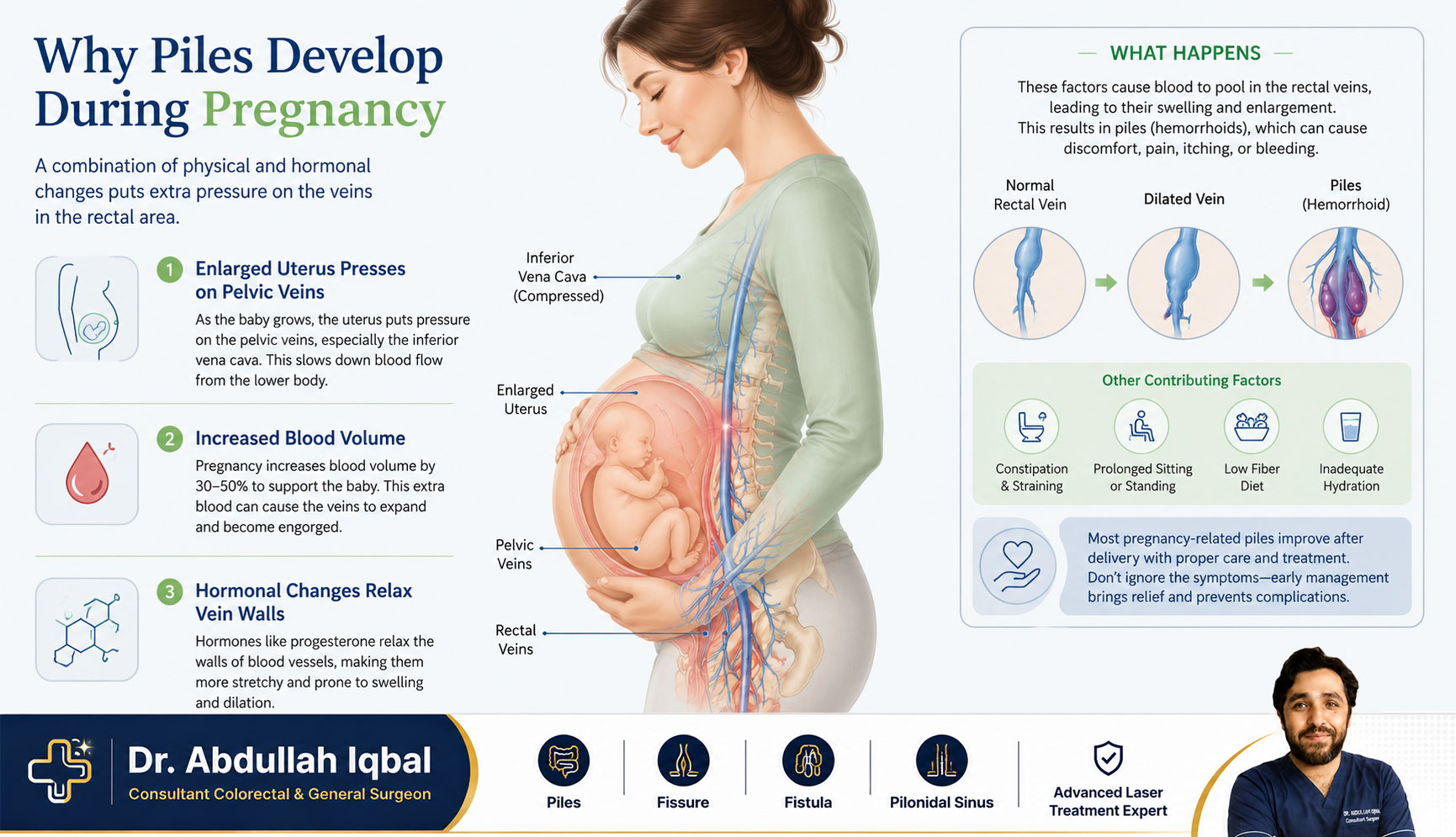
Pregnancy Mein Piles Kyun Hoti Hain?
This is the biggest cause of piles in women. Here is what happens physiologically:
As the uterus grows, it puts direct pressure on the inferior vena cava — the large vein that carries blood from the lower body back to the heart. This increased pressure backs up into the rectal and anal veins, causing them to swell. Combined with the hormonal changes of pregnancy that relax vein walls, and the constipation that is extremely common in pregnancy — piles almost become inevitable in many women.
Also iron supplements, which most pregnant women take, commonly cause constipation — which further worsens things.
Kya aap bhi pregnancy mein yeh problem face kar rahi hain? Is it the same experience? Please do share with your doctor — it is more common than you think.
Delivery Ke Baad Piles — Postpartum Hemorrhoids
Delivery itself — especially vaginal delivery with prolonged pushing — puts enormous pressure on the anal veins. I have patients who developed Grade 3 piles immediately after delivery. It was very sudden and very uncomfortable.
The good news is that mild postpartum piles often improve within a few weeks as swelling subsides. But moderate to severe piles — Grade 2 and above — usually need treatment. Breastfeeding mothers can still be treated — certain medications and procedures are safe.
Kya Delivery Ke Baad Laser Treatment Safe Hai?
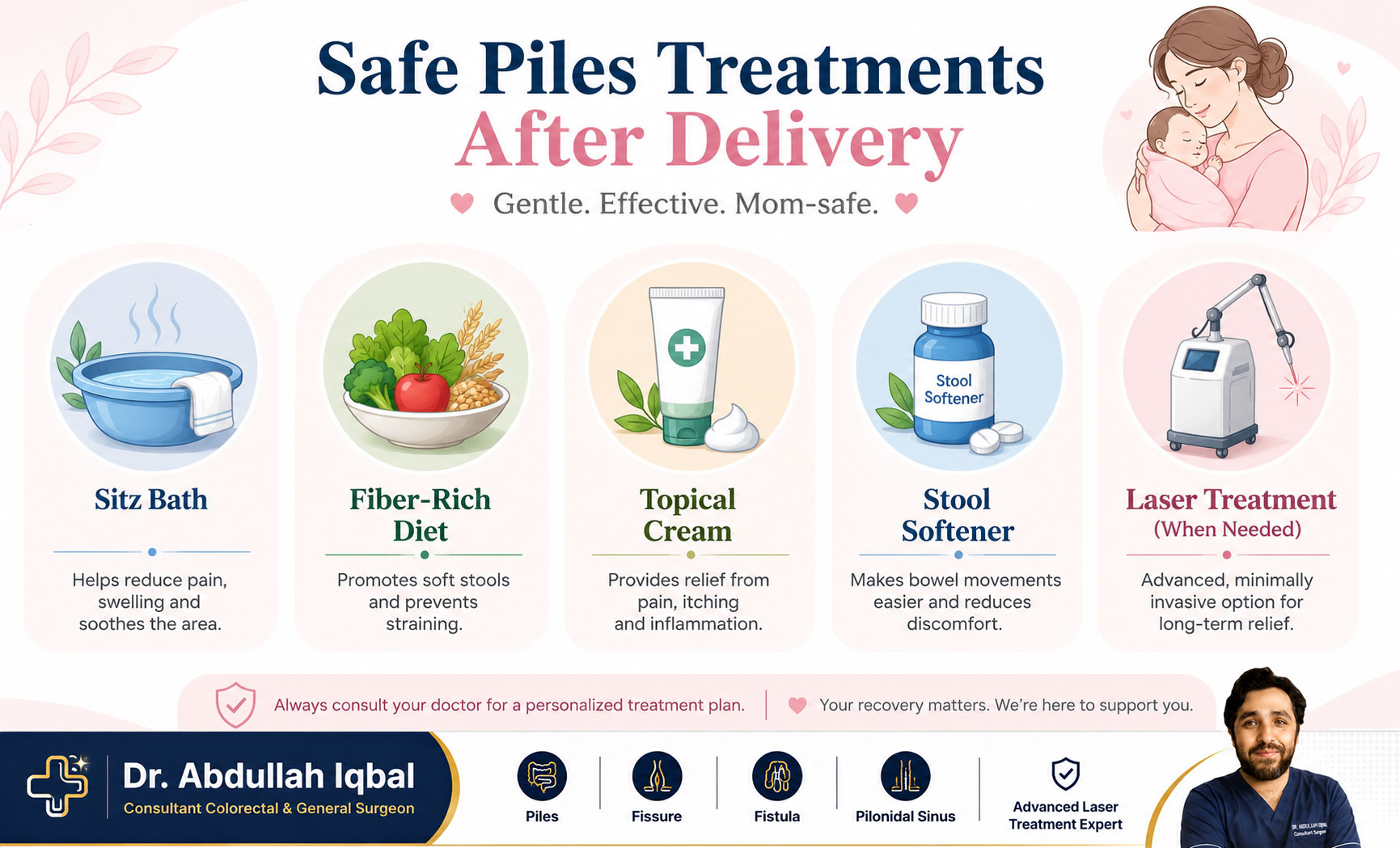
Yes — once you are past the immediate postpartum recovery period (typically 6-8 weeks), laser treatment is perfectly safe. In my experience, women who get their piles treated properly after delivery do much better in the long run than those who keep delaying.
During pregnancy itself, we generally avoid procedures and manage conservatively with diet, fiber, sitz baths, and safe topical medications. Definitive treatment is deferred to after delivery.
Piles After 40 in Women — Umar Ke Saath Kya Hota Hai
As women approach and pass through menopause, several things happen that increase piles risk. Hormone changes reduce the elasticity of connective tissue and vein walls. Bowel habits often change. Physical activity tends to decrease. Weight gain is common.
I have noticed that many women in their 40s and 50s come with longstanding piles they have been ignoring. Some have had it since their last pregnancy, 15-20 years ago. By then it has often progressed to Grade 3-4.
My honest advice: do not wait until it becomes severe. Piles treatment at Grade 2 is a 30-minute procedure. At Grade 4, it is significantly more complex.
Symptoms in Women — What To Watch For
Symptoms of piles in women are same as in men. But women sometimes confuse piles with other conditions. Things to watch:
- Bright red blood after passing stool — on paper or in toilet bowl
- Itching or irritation around the anal area
- A soft lump around the anus
- Pain or discomfort, especially when sitting
- Something bulging out during or after bowel movements
If you have any of these symptoms, please do not ignore them. Get checked. Early treatment is always better.
Treatment Options for Women
Same as for everyone else — treatment depends on grade:
| Grade | Recommended Treatment | If Pregnant |
|---|---|---|
| Grade 1 | Diet + fiber + Daflon | Same, safe in pregnancy |
| Grade 2 | Medication + laser or banding | Conservative until delivery |
| Grade 3-4 | Laser or surgical treatment | Defer to after delivery |
Frequently Asked Questions
Pregnancy mein piles kyun hoti hain?
Growing uterus inferior vena cava par pressure dalta hai, rectal veins mein blood back up hota hai. Hormonal changes vein walls ko relax karte hain. Plus constipation pregnancy mein very common hai — yeh sab milke piles banate hain.
Delivery ke baad piles theek ho jaati hain?
Mild Grade 1 piles aksar improve ho jaati hain kuch weeks mein. Grade 2 aur upar ke liye treatment usually zaroori hoti hai. Please apne doctor se discuss karein.
Kya pregnant khawateen ko laser treatment ho sakti hai?
Pregnancy ke doran hum generally procedures avoid karte hain aur conservative management karte hain. Laser treatment safely delivery ke 6-8 weeks baad ki ja sakti hai.
40 saal ke baad khawateen mein piles zyada kyun hoti hain?
Menopause ke baad hormonal changes, reduced connective tissue elasticity, changed bowel habits, and weight gain all contribute. Regular checkup recommended after 40.
Why piles happen in women after delivery?
The pushing effort during vaginal delivery puts intense pressure on anal and rectal veins — similar to prolonged straining. This can trigger or worsen piles significantly.
If you are a woman in Karachi dealing with piles — whether during pregnancy, after delivery, or at any age — please reach out. Visit Karachi Piles Clinic or book an appointment here. You can also read more about hemorrhoids treatment in Karachi.
Related reading
- Bawaseer Aur Fissure Mein Kaun Sa Khana Nuksan Karta Hai — Aur Kya Khana Chahiye?
- Effective Home Remedies for Piles, Fissures, and Fistulas
- Bawaseer Ki Alamat Aur Wajuhat Kya Hain — Aur Inhe Kaise Pehchanen?
- Bawaseer Ke Ilaj Mein Kya Naye Advancements Aaye Hain Aur Kaun Sa Sabse Behtar Hai?
- Piles Ki Alamat in English — Early Signs Jo Aapko Pata Honi Chahiye
- piles treatment in Karachi
- Anal fissure laser treatment
- Fistula treatment
- Book an appointment

- Fissure Cream vs Laser Treatment — Which One Actually Works? - June 29, 2026
- Fissure During Pregnancy — Safe Treatment Options and What to Avoid - June 22, 2026
- Going to the Washroom with Fissure — 7 Tips That Actually Reduce Pain - June 15, 2026
