

One of the most common questions I hear from my patients is: “Doctor, fissure kitni der mein theek hoti hai?” It is a fair question — the pain is sharp, daily life becomes difficult, and naturally you want to know when relief will come. In my experience of treating hundreds of fissure patients at Hill Park General Hospital, I can tell you that the answer depends on two factors: the type of fissure you have, and the treatment you choose.
What Is an Anal Fissure? — A Quick Overview
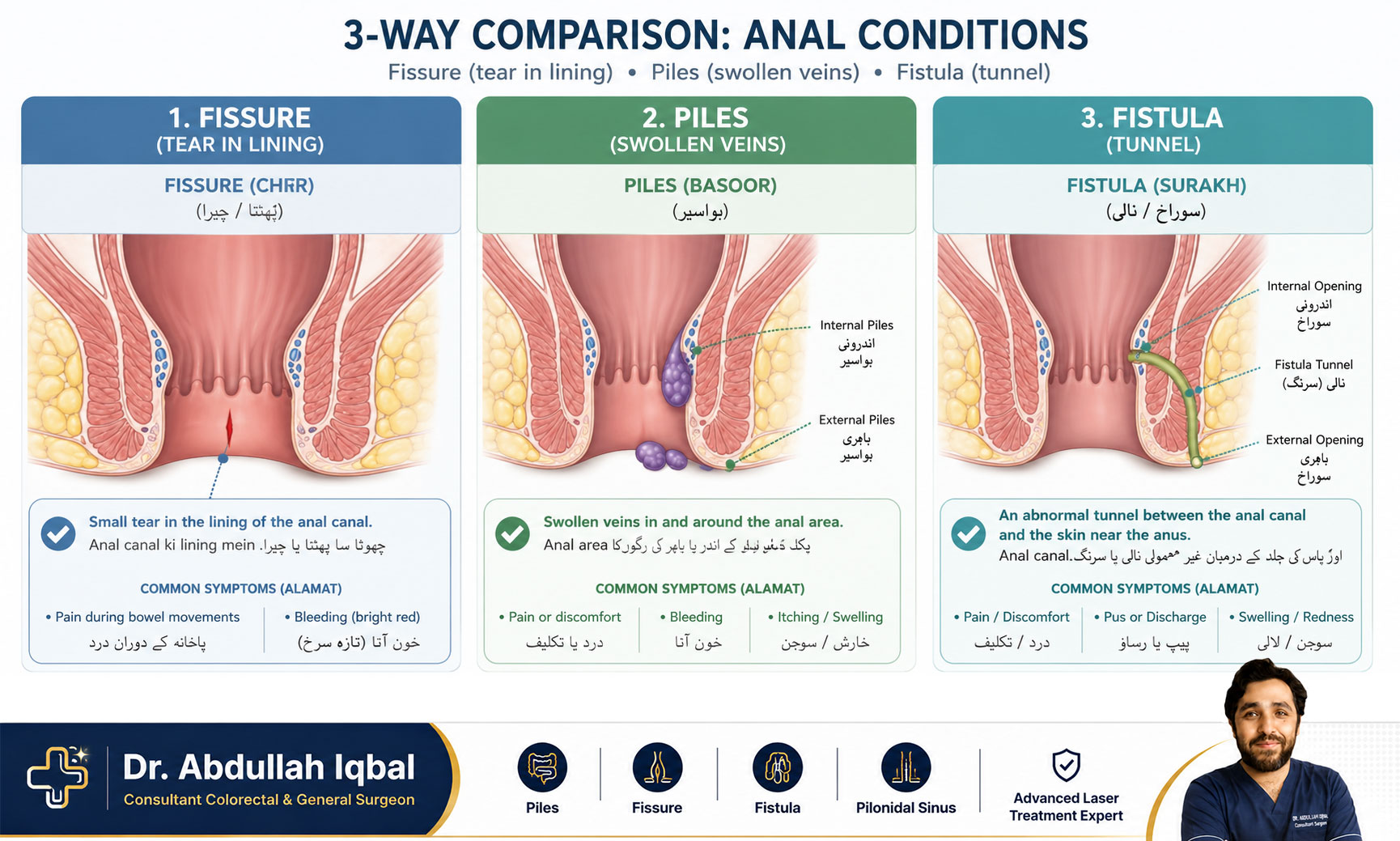
An anal fissure is a small tear or cut in the lining of the anus. Think of it like a paper cut — small in size, but extremely painful because the area is full of nerve endings. Every time you pass stool, the tear reopens, causing sharp pain and sometimes bleeding. According to the NHS UK, anal fissures are one of the most common anorectal conditions, affecting people of all ages.
In my clinic, I come across patients who have been suffering silently for months — sometimes years — because they assumed it was piles. Fissure aur piles bilkul alag cheezein hain, and the treatment is different too.
Acute Fissure Healing Timeline — Week by Week
An acute fissure is a fresh tear, usually less than 6 weeks old. If caught early and treated properly, most acute fissures heal without surgery. Here is what I tell my patients to expect:
Week 1–2: This is the hardest period. Pain during and after bowel movements is at its peak. I advise patients to start a high-fiber diet, drink at least 8-10 glasses of water, and take sitz baths 2-3 times daily. A stool softener like Ispaghol (psyllium husk) helps significantly.
Week 3–4: If you are following the treatment plan, the pain should start reducing. The tear begins to close from the edges. Yahan sabr bahut zaroori hai — many patients stop the diet changes when pain decreases, and the fissure reopens.
Week 5–6: Most acute fissures should be fully healed by this point. If pain persists beyond 6 weeks, the fissure is now classified as chronic, and you should see a specialist.
Chronic Fissure — Why It Takes Longer
A chronic fissure is one that has lasted more than 6-8 weeks despite conservative treatment. At this stage, the body develops scar tissue around the tear (called a sentinel pile), and the internal sphincter muscle goes into spasm, preventing blood flow to the area. Without proper blood supply, the wound simply cannot heal on its own.
I strongly suggest that if your fissure has not healed in 6 weeks, do not wait longer. In my opinion, this is where laser sphincterotomy becomes the most effective option — it relaxes the spasm, restores blood flow, and the tear heals within 7-10 days after the procedure.
Laser Treatment Recovery Timeline
For patients who undergo laser sphincterotomy at my clinic, the recovery timeline is much faster than most people expect:
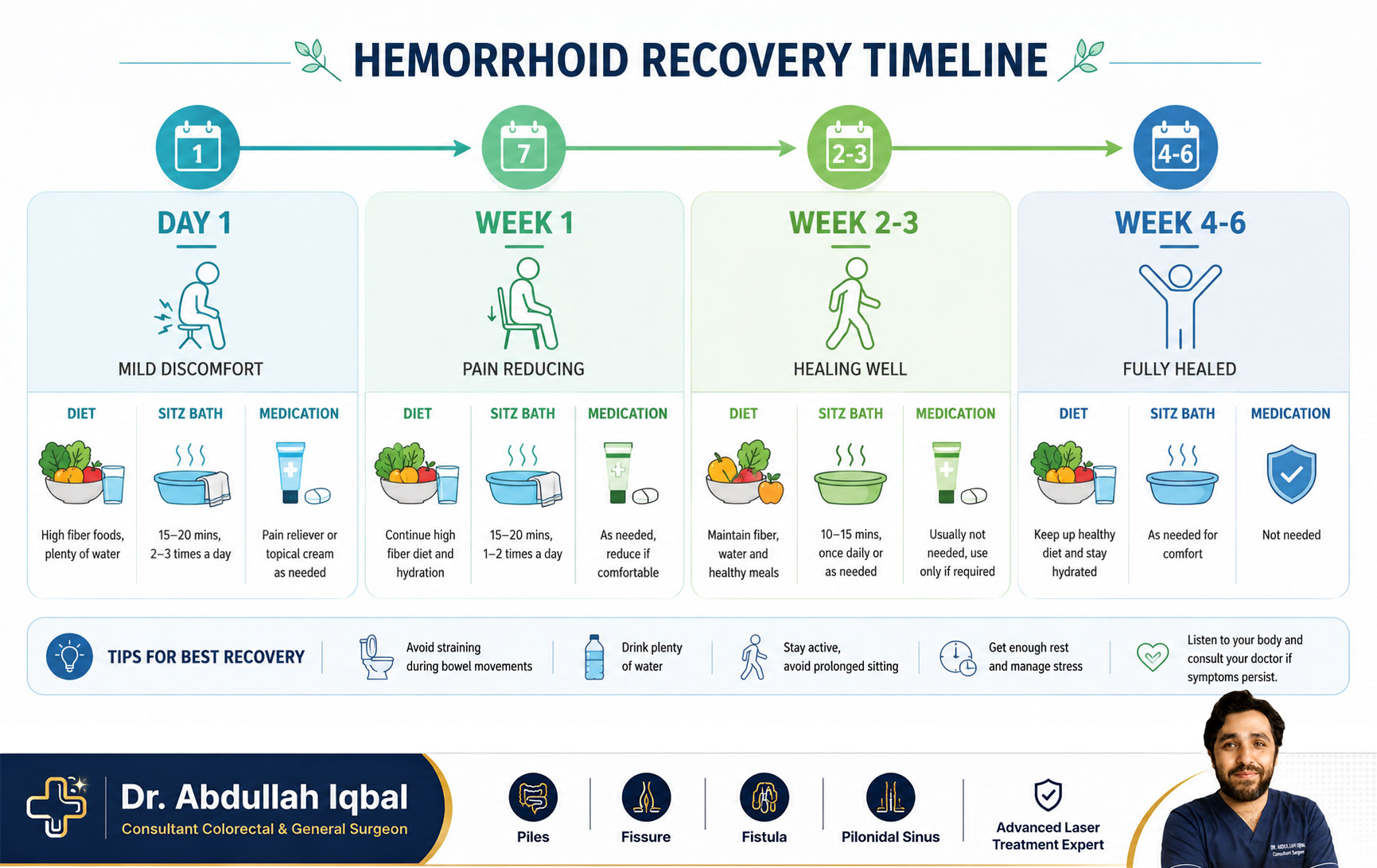
Day 1 (Surgery Day): The procedure takes 10-15 minutes. You go home the same day. Mild discomfort is normal.
Day 2–3: First bowel movement after surgery — this is the part patients worry about most. I have seen that with proper stool softeners, it goes much more smoothly than expected. Pain level is significantly less than what the fissure was causing before.
Day 5–7: Most patients return to their normal routine — office work, daily activities, and regular eating.
Week 2–3: The wound is almost fully healed. I schedule a follow-up at one week and then at three weeks to confirm everything is on track.
What Slows Down Healing?
In my experience, these are the top reasons fissures take longer to heal:
1. Constipation: Hard stool reopens the tear every time. Without fixing your diet, no treatment will work long-term.
2. Ignoring the problem: Many patients wait too long — sharm ki wajah se doctor ke paas nahi jaate — and by the time they come to me, the fissure is chronic with scar tissue.
3. Stopping treatment early: Feeling better does not mean fully healed. I advise continuing the diet and sitz baths for the full recommended period.
4. Spicy food: I know this is Karachi and spicy food is part of life, but during healing, it irritates the wound and delays recovery.
When Should You See a Doctor?
I strongly recommend seeing a specialist if:
• Your fissure has not healed after 6 weeks of home treatment
• You see blood during bowel movements regularly
• Pain is getting worse instead of better
• You develop a lump or swelling near the anus (this could be a fistula forming)
Frequently Asked Questions
Fissure se pareshaan hain? Aaj hi consultation book karein.
Dr. Abdullah Iqbal — Pakistan’s First Laser Proctologist

- Fissure Cream vs Laser Treatment — Which One Actually Works? - June 29, 2026
- Fissure During Pregnancy — Safe Treatment Options and What to Avoid - June 22, 2026
- Going to the Washroom with Fissure — 7 Tips That Actually Reduce Pain - June 15, 2026
