

I get asked this question almost every day. Patients sit in front of me and the first thing they want to know is — “Doctor, yeh mujhe kyun hua?” And sometimes there is almost a guilt in their voice, like they did something wrong. Most of the time it is lifestyle. But let me explain everything properly so you understand piles, why it happens, and yes — whether it is dangerous or not.
Understanding why piles occur is the first step toward prevention and better treatment outcomes.
Piles Kya Hain? Quick Reminder
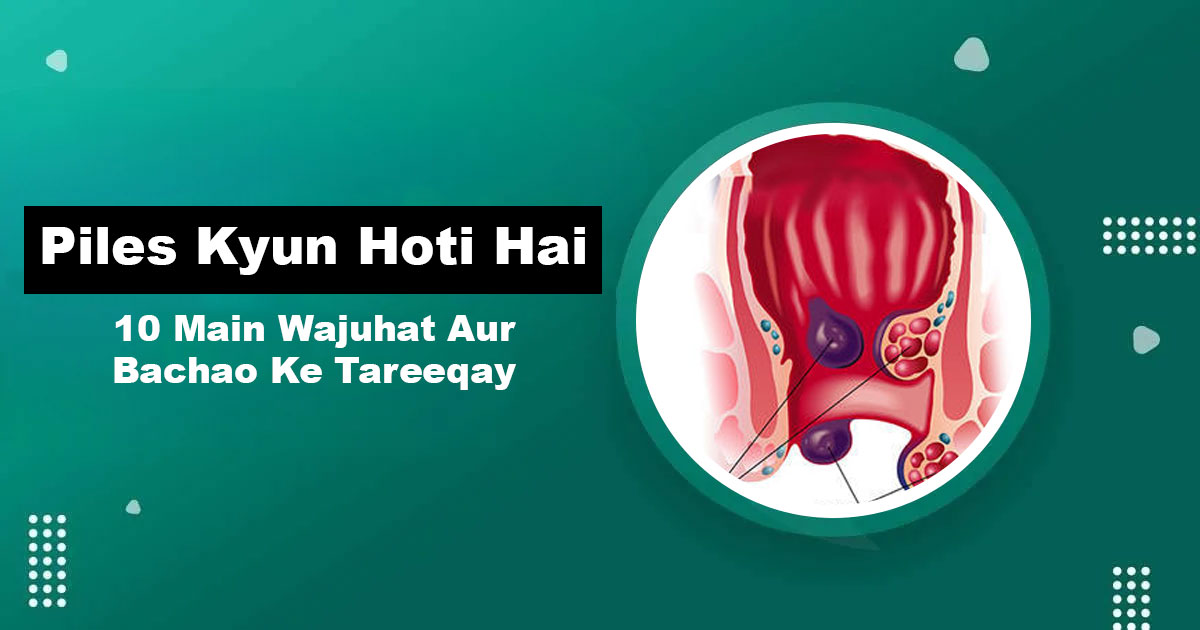
Piles — also called hemorrhoids or bawaseer — are swollen veins in the lower rectum and anus. Think of them like varicose veins in the legs, but in the anal region. When these veins get too much pressure for too long, they swell up. That is piles.
Now why does that pressure happen? Here are the main reasons. In my experience, most patients have more than one cause — it is usually a combination.
Wajah Number 1: Chronic Constipation
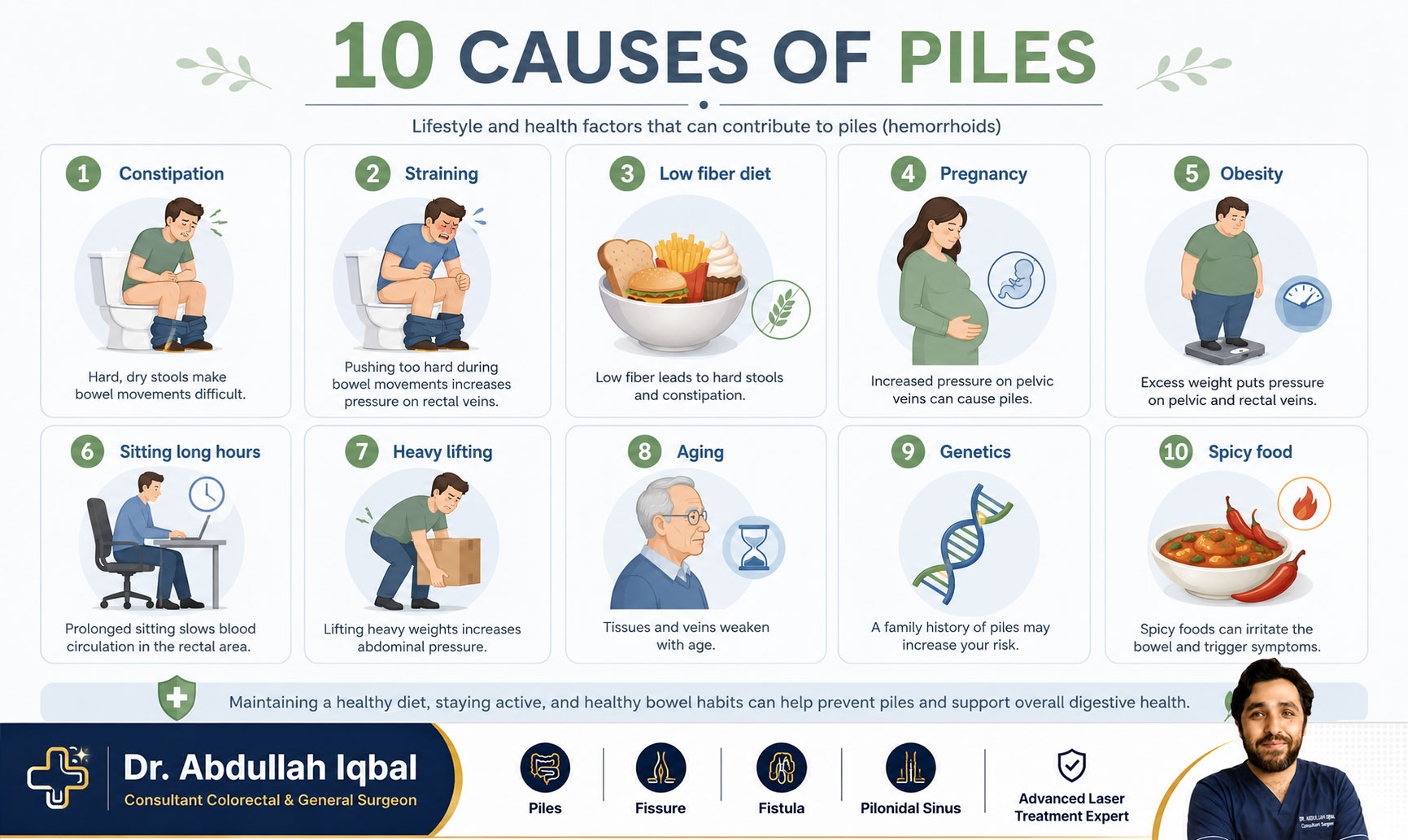
This is the number one cause I see in Karachi. People eat little fiber, drink insufficient water, and then strain hard during bowel movements. That straining increases pressure on the anal veins tremendously. Do it every day for months or years — piles will develop. It is almost guaranteed.
Kya aap bhi rozana bathroom mein zyada waqt guzarte hain? Mobile phone le ke baithna actually makes things worse — the prolonged sitting increases pressure. Yeh baat mere bahut saare patients ko shocking lagti hai but it is medically true.
Wajah Number 2: Low Fiber Diet
Connected to constipation but worth mentioning separately. Pakistani diet — especially in urban families — is often low in fiber. White rice, maida roti, processed foods. Very little vegetables, lentils, whole grain. Without fiber the stool becomes hard and difficult to pass. Hard stool means more straining. More straining means more pressure on those veins.
Wajah Number 3: Not Drinking Enough Water
Dehydration makes stool hard. Simple as that. I tell every patient — minimum 8 glasses of water daily. In Karachi’s heat, maybe more. Most people I see are chronically under-hydrated. Tea and chai do not count — they actually dehydrate. Water is water.
Wajah Number 4: Pregnancy
Pregnancy is a major cause of piles in women. The growing uterus puts direct pressure on the rectal veins. Also, hormonal changes during pregnancy cause veins to relax and become more prone to swelling. And constipation is very common in pregnancy because of iron supplements and reduced physical activity.
I have a separate detailed article about piles in women and pregnancy if you want to read more on this topic.
Wajah Number 5: Sitting for Long Hours
This is increasingly common among office workers and students in Karachi. Hours of sitting — on a chair, on the floor, on the toilet — increases pressure on the anal area. Over time this contributes to piles formation. Standing up and moving around every hour is genuinely protective.
Wajah Number 6: Obesity
Excess body weight increases intra-abdominal pressure which then translates to increased pressure on the rectal veins. Overweight patients are significantly more likely to develop piles. And their piles tend to be more severe.
Wajah Number 7: Genetics
Yes, piles can run in families. If your parents had piles, your risk is higher. The vein wall strength and elasticity has a genetic component. This does not mean you will definitely get piles if there is a family history — but you should be more careful about diet and lifestyle.
Wajah Number 8: Chronic Diarrhea
Constipation gets all the attention but diarrhea is also a risk. Frequent loose stools with repeated wiping causes irritation and inflammation in the anal region. It can trigger or worsen existing piles.
Wajah Number 9: Heavy Lifting
Regularly lifting heavy weights without proper technique increases abdominal pressure. Gym-goers and laborers who do heavy physical work are at higher risk. Proper breathing technique during lifting — exhaling on the effort — reduces this risk significantly.
Wajah Number 10: Age
As we get older, the connective tissue supporting the anal veins becomes weaker. Piles become more common after 45-50 years of age. This is natural but dietary and lifestyle habits can slow down or accelerate this process.
Kya Piles Khatarnak Hai? Honest Answer
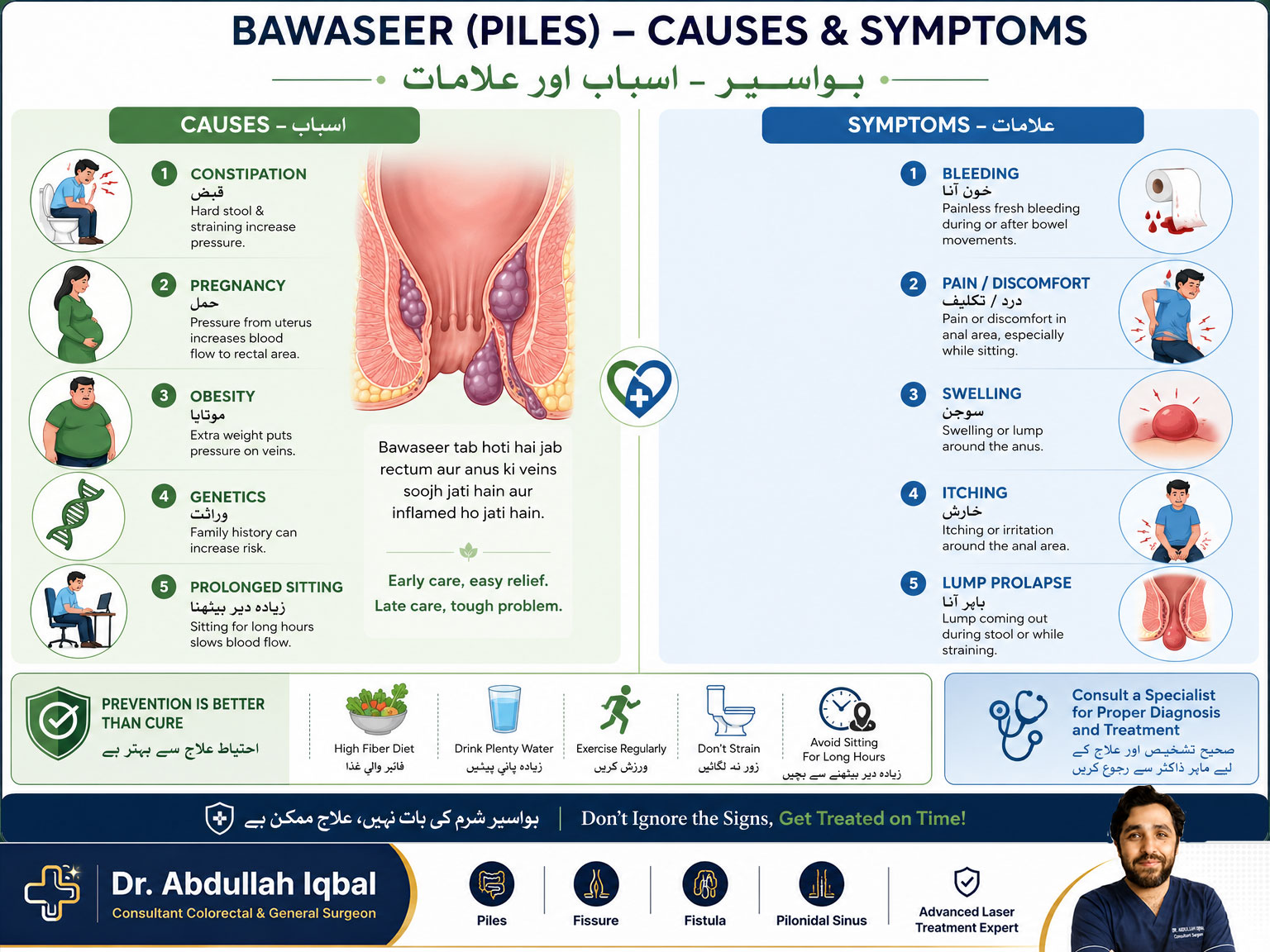
This is what everyone really wants to know. My answer is — piles itself is not life threatening. But ignoring it can lead to serious complications. Chronic bleeding from piles can cause anemia. Prolapsed Grade 4 piles can become strangulated — which is very painful and needs urgent treatment.
Also — and this is very important — rectal bleeding is not always piles. Colorectal cancer also causes rectal bleeding. If you assume every bleeding is piles and never get it checked, you might miss something serious. So always, always get rectal bleeding evaluated by a doctor. Can piles cause cancer — I have written about this separately.
Prevention — Piles Se Kaise Bachein
Good news — most piles are preventable with the right habits. Here is what I recommend to all my patients as a baseline:
- Drink 8-10 glasses water daily
- Eat high fiber — vegetables, daal, ispaghol
- Do not strain during bowel movements
- Do not sit on the toilet for more than 5 minutes
- Take walks — even 20 minutes daily helps
- Maintain healthy weight
Simple habits. Difficult to maintain consistently. But worth it.
Frequently Asked Questions
Piles kya constipation ki wajah se hoti hai?
Haan — chronic constipation and straining is the single biggest cause of piles in Pakistan. Reducing straining through diet and fiber intake is the most important preventive step.
Kya piles genetic hai?
Partially yes. Family history increases your risk. If parents had piles, pay more attention to diet, hydration, and bowel habits.
Kya piles dangerous hai?
Piles itself is not life threatening. But complications like anemia from chronic bleeding, or strangulated Grade 4 piles, are serious. Also rectal bleeding should always be evaluated to rule out other causes including cancer.
Piles se kaise bacha ja sakta hai?
High fiber diet, 8-10 glasses water, no prolonged toilet sitting, regular walking, healthy weight. These habits dramatically reduce piles risk.
Why piles occur in young people?
Young people in urban Pakistan increasingly have piles due to poor diet (low fiber, processed food), sedentary lifestyle, long hours sitting, and low water intake. Piles is not an old person’s disease anymore.
If you think you might have piles, or just want a proper check, come see me at Karachi Piles Clinic. Early detection means simpler treatment. You can also read more about piles grades to understand how serious your condition might be.
Related reading
- Band Ligation Bawaseer Ka Ilaj — Kya Yeh Aapke Liye Sahi Option Hai?
- Khawateen Mein Bawaseer — Pregnancy, Delivery Ke Baad Aur Umar Ke Saath
- Bawaseer Ki Alamat — 7 Nishaniyan Jo Ignore Na Karein
- Piles Ki Alamat in English — Early Signs Jo Aapko Pata Honi Chahiye
- Piles Pictures — Bawaseer Kaisi Dikhti Hai? (Visual Grade Guide)
- Pakistan’s first laser proctologist
- Anal fissure laser treatment
- Fistula treatment
- Contact Karachi Piles Clinic

- Fissure Cream vs Laser Treatment — Which One Actually Works? - June 29, 2026
- Fissure During Pregnancy — Safe Treatment Options and What to Avoid - June 22, 2026
- Going to the Washroom with Fissure — 7 Tips That Actually Reduce Pain - June 15, 2026
