
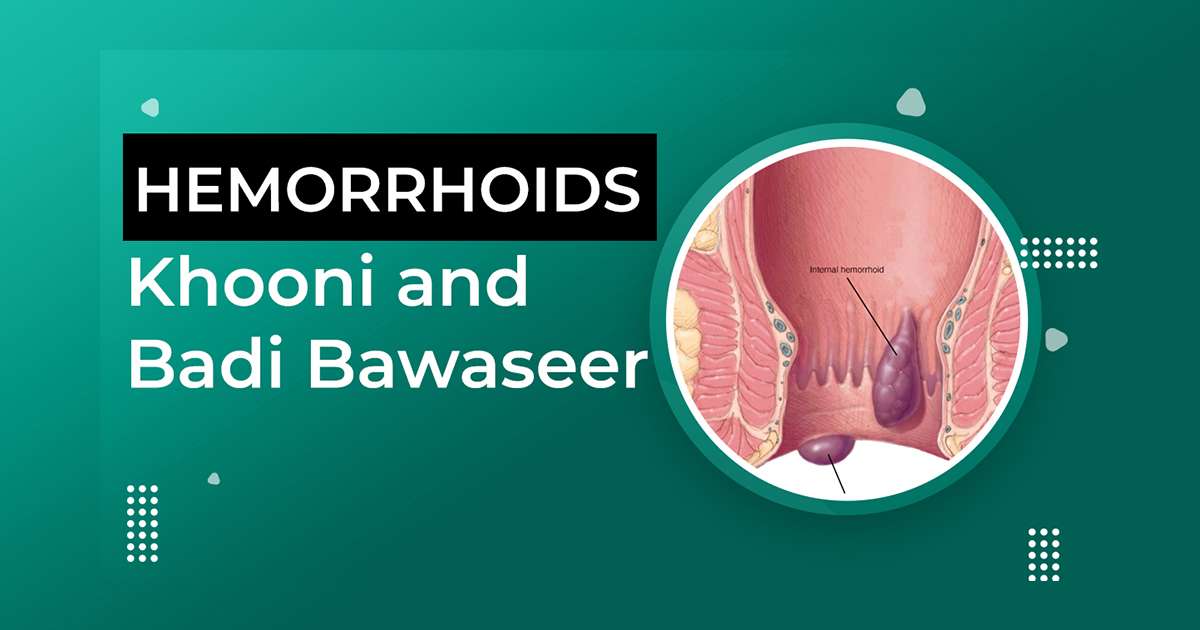
Let me be honest with you. Most patients who come to my clinic at Karachi Piles Clinic don’t actually know what type of bawaseer they have. They just say, “doctor, khoon aa raha hai” or “bahar aa gaya hai.” And I get it – nobody teaches you this stuff. But understanding the difference between khooni bawaseer and badi bawaseer can actually help you choose the right treatment faster. So let me explain this properly.
I am Dr. Abdullah Iqbal – general surgeon and proctologist at Karachi Piles Clinic. I treat piles, fissure, and fistula on daily basis. In my experience, early understanding of the condition saves patients from unnecessary delay – and delay, unfortunately, is what makes things worse.
What Is Khooni Bawaseer (Bleeding Hemorrhoids)?
Khooni bawaseer means bleeding piles. Simple. When the swollen blood vessels inside or around your rectum start to bleed – usually during bowel movements – that is khooni bawaseer. The blood is typically bright red. You’ll notice it on toilet paper, in the toilet bowl, or sometimes on the stool itself.
Aapne bhi yeh notice kiya hoga? Toilet ke baad tissue pe laal daag? That’s a classic sign. Don’t ignore it.
In my opinion, khooni bawaseer is more common than people think. I see it every single day at my clinic. The bleeding can be very light – just spotting – or in some cases it can be quite heavy. The important thing to understand is that bleeding from the back passage is never something you should just wait out on your own.
Common symptoms I see in patients with khooni bawaseer:
- Bright red blood on toilet paper or in toilet bowl
- Mild itching or burning around the anus
- Feeling of incomplete bowel emptying
- Occasional mucus discharge
- No visible lump outside (in early stage)
- Discomfort during and after sitting
What Is Badi Bawaseer (Severe or Prolapsed Hemorrhoids)?
Badi bawaseer is a different thing. “Badi” literally means big – and in clinical terms, it refers to hemorrhoids that have become enlarged enough to either cause significant symptoms or actually come out of the anus. This is called prolapse.
Now here’s something many patients don’t realize – badi bawaseer can also bleed. So the two types are not always separate. I have noticed that patients with badi bawaseer often also have bleeding, plus they have extra problems: pain when sitting, a visible or felt lump outside, mucus, and sometimes a real difficulty walking or doing normal activities.
Kya aapko bhi aisa feel hota hai ke kuch bahar aa gaya hai? That would be badi bawaseer.
Khooni vs Badi Bawaseer – A Clear Comparison
Let me put this side by side so it’s easy to understand:
| Feature | Khooni Bawaseer (Bleeding) | Badi Bawaseer (Prolapsed/Severe) |
|---|---|---|
| Main symptom | Rectal bleeding | Visible lump, prolapse |
| Pain level | Usually mild | Moderate to severe |
| Location | Mostly internal | Internal + external or prolapsed |
| Bleeding | Yes (main sign) | May or may not bleed |
| Stage | Usually Grade 1 or 2 | Usually Grade 3 or 4 |
| Urgency of treatment | Can be managed conservatively at first | Needs active treatment soon |
Grades of Hemorrhoids – Which Stage Are You?
Hemorrhoids are classified into four grades. This is the proper medical classification and it directly affects what treatment I recommend. Here’s how they break down:
- Grade 1 – Swelling inside, no prolapse, bleeding only. This is classic khooni bawaseer in early stage.
- Grade 2 – Prolapse during straining but goes back in on its own. Bleeding may be present.
- Grade 3 – Prolapse during straining and has to be pushed back in manually. This is badi bawaseer territory.
- Grade 4 – Permanently prolapsed, cannot be pushed back. Needs surgical or laser treatment.
Most patients I see come to me at Grade 2 or Grade 3 – because they waited too long at Grade 1. Please don’t do that.
Treatment Options – What Actually Works
This is where it gets practical. The treatment depends on the grade and symptoms. Let me walk you through what we actually offer at Karachi Piles Clinic.
For Grade 1 and early Grade 2 (khooni bawaseer mainly), these 4 approaches usually work:
- Diet and fiber – High fiber diet, more water. Sounds simple but honestly this alone helps 40-50% of early cases in my experience.
- Sitz bath – Warm water soaking twice a day. Reduces swelling and gives immediate comfort.
- Topical creams or suppositories – Prescribed medications to reduce inflammation and bleeding.
- Band ligation – A small rubber band is placed around the hemorrhoid to cut off its blood supply. Very effective for Grade 1-2. Read more about band ligation treatment in Karachi.
For Grade 3 and 4 (badi bawaseer), the game changes. In my opinion, this is where laser treatment or surgical intervention becomes necessary. I have done hundreds of laser procedures for advanced hemorrhoids and the recovery is genuinely faster compared to traditional surgery. If you want to understand all your options, check out this detailed guide on best piles treatment options.
Also important – what you eat plays a bigger role than most people realize. I always tell my patients about foods to avoid when you have piles because wrong food habits can undo even a good treatment.
When Should You See a Doctor?
Look, I understand people hesitate. It’s a sensitive topic. Especially in Pakistani culture, discussing anything related to this area feels embarrassing. I’ve had patients who waited 2-3 years before coming in. By that time, what was a simple Grade 1 had become Grade 3.
Come see me – or any qualified proctologist – if:
- You see blood more than once or twice
- Pain is affecting your daily routine
- You feel something coming out from the back passage
- Home remedies have not helped in 1-2 weeks
- You are also having symptoms of causes of bawaseer you haven’t addressed
Frequently Asked Questions
Q: Khooni bawaseer aur badi bawaseer mein kaun zyada khatarnak hai?
Badi bawaseer (Grade 3-4) is generally more advanced and requires more aggressive treatment. But khooni bawaseer should not be ignored either – because rectal bleeding can sometimes be a sign of other conditions that need to be ruled out by a doctor.
Q: Kya khooni bawaseer apne aap theek ho sakti hai?
Sometimes early Grade 1 bleeding can settle with diet changes and sitz baths. But in my experience, without treating the underlying cause, it tends to come back. It is better to get a proper evaluation done.
Q: Laser treatment kya safe hai bawaseer ke liye?
Yes, very safe. I perform laser procedures at Karachi Piles Clinic regularly. Recovery is fast, most patients go home same day, and the pain after procedure is significantly less than traditional surgery. You can read more about laser treatment for piles in Karachi here.
Q: Surgery ke baad kya piles wapas aa sakti hain?
This is one of the most common questions I get. The short answer is: yes, they can come back if lifestyle and diet are not corrected. We have a full article explaining this – can piles come back after surgery.
Q: Kya ghar pe treatment karna sahi hai?
Home care works for very early, mild cases. But if symptoms have been there for more than 2 weeks, or if bleeding is heavy, please don’t rely only on home treatment. A proper diagnosis is essential.
If you’re experiencing any of these symptoms and are based in Karachi, you are welcome to visit Karachi Piles Clinic. I personally see patients and do a thorough examination before recommending any treatment. There is no need to feel embarrassed – this is a medical condition, and it is very treatable.
→ Book an appointment with Dr. Abdullah Iqbal
Written by Dr. Abdullah Iqbal – MBBS, FCPS (Surgery). General Surgeon and Laser Proctologist. Karachi Piles Clinic, Karachi, Pakistan.