
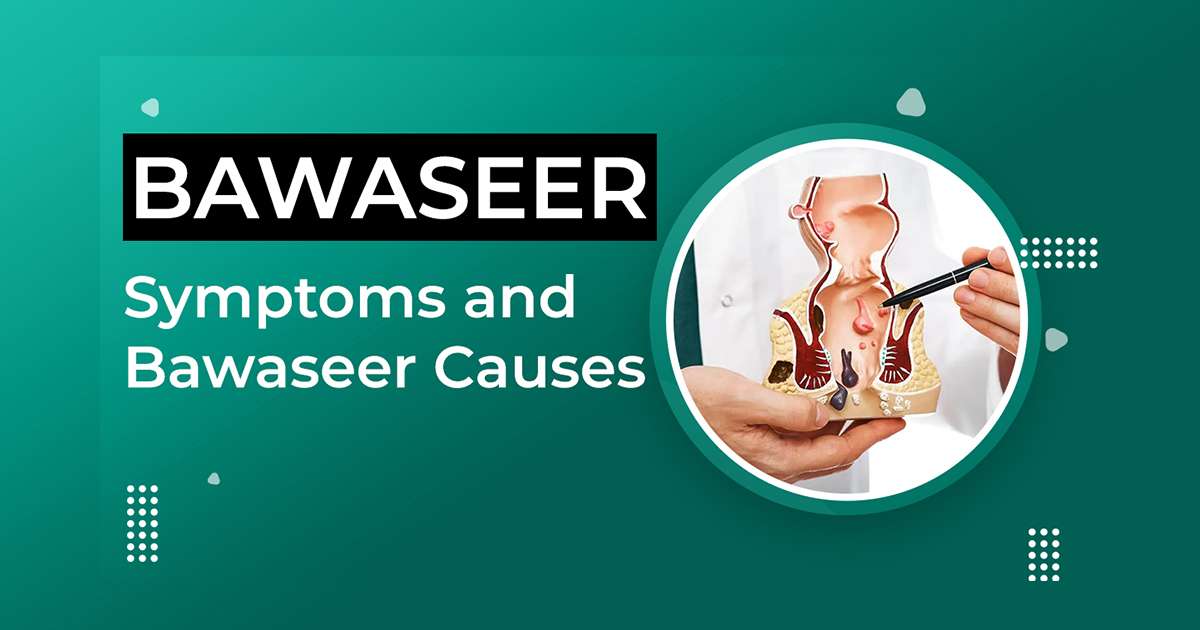
Let me be honest — bawaseer is one of those problems people in Pakistan suffer with for months, sometimes years, before coming to see a doctor. I have patients who came to me at Karachi Piles Clinic after 3 years of bleeding. Three years. And when I ask why they waited so long, the answer is usually embarrassment or just not knowing what the symptoms actually mean.
So this article is about exactly that — the symptoms and causes of bawaseer (piles / hemorrhoids), explained properly. No complicated words. No filler. Just what you actually need to know.
📌 Zarori Baat
Bawaseer ko Urdu mein “باواسیر” aur English mein Piles ya Hemorrhoids kehte hain. Yeh koi sharmindagi ki baat nahi — yeh ek common medical condition hai jo Pakistan mein bohat zyada log suffer karte hain. Waqt par pehchaan aur ilaj zaroori hai.
Bawaseer Ki Alamat Kya Hoti Hain — Aur Kaise Pata Chale Ke Yeh Bawaseer Hi Hai?
The most common symptom is fresh red bleeding after passing stool. Not mixed with stool — usually seen on toilet paper or dripping in the toilet bowl. That’s a classic sign of internal hemorrhoids. I have noticed that a lot of patients confuse this with something more serious, like cancer, and that fear stops them from coming to the doctor. In my opinion, any rectal bleeding should be checked — but in most cases in younger adults, it is bawaseer.
Other symptoms I see regularly in my clinic include:
- Itching or burning around the anus — especially after using the toilet
- A lump or swelling outside the anus — soft, sometimes painful
- Feeling of incomplete evacuation — patients say “feels like something is still there”
- Mucus discharge — in prolapsed hemorrhoids
- Pain or discomfort while sitting — especially with external hemorrhoids
- Heaviness in the rectal area — difficult to describe but very real
Kya aapko bhi inme se kuch mehsoos ho raha hai? Agar haan, to please delay mat karein.
One important thing — not all hemorrhoids cause pain. Internal hemorrhoids are often painless. Bleeding is usually the only sign at first. This is exactly why so many people ignore it for so long. No pain, so they assume it’s not serious. But by the time pain arrives, the condition has often moved to Grade 3 or 4.
Bawaseer Kyun Hoti Hai — Iske Asli Asbab Kya Hain?
The root cause of bawaseer is increased pressure on the veins in the lower rectum and anus. When that pressure builds up repeatedly over time, those veins swell, stretch, and eventually become hemorrhoids. Simple as that.
In my experience, the most common causes I see in Karachi patients are constipation and straining on the toilet. People spend 15, 20 minutes on the toilet every morning — scrolling their phone, waiting. That straining is doing real damage. Also, low fiber diet is a big one. Karachi’s food culture — biryani, parathas, fried stuff — is not exactly high in fiber.
The main causes include:
- Chronic constipation — the number one cause in my clinic
- Straining during bowel movements — even once daily straining is enough over months
- Low fiber diet — common in urban Pakistani food habits
- Prolonged sitting — especially people with desk jobs
- Pregnancy — pressure on pelvic veins in third trimester
- Heavy lifting — gym-goers, laborers, warehouse workers
- Family history — yes, there is a genetic component
Also — I always ask patients about their toilet habits. In my opinion, using a Western toilet without a footstool puts more strain on the anorectal area compared to squatting. Small thing, but it matters.
Khooni Bawaseer Aur Badi Bawaseer Mein Kya Farq Hai — Dono Ek Hi Cheez Hain?
No, they are not the same — and this is something a lot of people in Pakistan get confused about. Khooni bawaseer means internal hemorrhoids where bleeding is the main symptom. Badi bawaseer refers to external or prolapsed hemorrhoids — where you can feel or see a lump outside. I wrote a full detailed article on this: difference between khooni and badi bawaseer. But briefly:
| Feature | Khooni Bawaseer (Internal) | Badi Bawaseer (External/Prolapsed) |
|---|---|---|
| Location | Inside the rectum | Outside or at the anal opening |
| Main symptom | Painless bleeding | Lump, pain, discomfort |
| Visible? | Not visible | Visible or felt externally |
| Pain level | Usually none | Can be quite painful |
| Grade | Grade 1–3 | Grade 3–4 |
Bawaseer Ki Stages Kya Hoti Hain — Aur Mujhe Kab Doctor Ke Paas Jana Chahiye?
There are four grades of hemorrhoids. Grade 1 — bleeding only, no prolapse. Grade 2 — hemorrhoid comes out during straining but goes back on its own. Grade 3 — comes out and you have to push it back manually. Grade 4 — stays outside permanently and cannot be pushed back.
In my opinion — you should see a doctor at Grade 1. Not Grade 4. The earlier you come, the simpler the treatment. Grade 1 and 2 can often be managed with medicines, diet changes, or a simple clinic procedure like band ligation. Grade 3 usually needs laser. Grade 4 sometimes needs surgery. See the pattern? Waiting makes everything harder.
Agar aapko 2 hafte se zyada se bleeding ho rahi hai, ya koi lump feel ho rahi hai — please ab intezaar mat karein.
🩺 Dr. Abdullah Iqbal Ki Rai
Mere paas rozana aise mareez aate hain jinhon ne 1 ya 2 saal takleef bardasht ki. Sharmindagi se nahi bata, ya ghar ke nuskhon par bharosa kiya. Lekin yeh cheez bilkul samajh mein aati hai — is mozu par baat karna mushkil lagta hai. Isliye mein personally har mareez ko ek comfortable aur respectful environment mein examine karta hun. Karachi Piles Clinic mein aapka masla bilkul confidential rehta hai.
Bawaseer Ko Ghar Par Kaise Pehchanen Aur Kab Tashkhees Ke Liye Doctor Zaroori Hai?
You can suspect bawaseer at home based on symptoms — fresh bleeding, itching, lump. But you cannot confirm it without examination. And this is important — rectal bleeding is not always bawaseer. Sometimes it can be a fissure, fistula, or in older patients, something more serious. So please don’t self-diagnose and just buy cream from the pharmacy.
At Karachi Piles Clinic, I do a proper clinical examination — proctoscopy if needed — to confirm exactly what’s going on before recommending any treatment. You can also read about all available piles treatment options to understand what to expect. And if diet is part of your concern, do check my guide on foods to avoid with piles — it makes a bigger difference than most people realize.
Frequently Asked Questions
Q: Bawaseer in English mein kya kehte hain?
Bawaseer is called Piles or Hemorrhoids in English. Both words mean the same thing — swollen veins in or around the rectum and anus.
Q: Kya bawaseer mein hamesha khoon aata hai?
Not always. Internal hemorrhoids typically bleed but may not cause pain. External hemorrhoids may be painful without much bleeding. Some patients have both types simultaneously.
Q: Bawaseer aur fissure mein kya farq hai?
Fissure is a tear in the anal lining — it causes sharp pain during and after passing stool, and fresh bleeding. Bawaseer is swollen veins — usually less painful in early stages but causes bleeding and lumps. Both need different treatments. I treat both at Karachi Piles Clinic — you can read more about anal fissure treatment here.
Q: Bawaseer ki wajah se cancer ho sakta hai?
No — bawaseer itself does not cause cancer. But rectal bleeding can sometimes be a symptom of colorectal cancer in older patients. This is another reason why proper clinical examination is important rather than assuming every bleeding episode is bawaseer.
If you are in Karachi and dealing with any of these symptoms, please don’t wait. Visit Karachi Piles Clinic for a proper examination. I see every patient myself.
Written by Dr. Abdullah Iqbal – MBBS, FCPS (Surgery). General Surgeon and Laser Proctologist. Karachi Piles Clinic, Karachi, Pakistan.