My name is Dr. Abdullah Iqbal. I am a general surgeon and proctologist based in Karachi — and if you are looking for a piles doctor in Karachi, you have come to the right place. I have been treating bawaseer (piles), fissures and fistulas for over 16 years now. In that time I have operated on thousands of patients from all over Pakistan — Karachi, Lahore, Islamabad, even some from abroad.
I want to be honest with you. Most patients who come to me have already tried everything — desi totke, creams, tablets, home remedies. Some have suffered for years. And they come to me as a last resort. That breaks my heart every time. Because in my experience, piles is very treatable, especially when caught early. And with laser surgery today, even advanced cases can be treated with very little pain and a fast recovery.
So let me tell you everything you need to know — in plain language, no medical jargon — so you can make the right decision for yourself.
What Exactly Are Piles? (Bawaseer Kya Hoti Hai?)
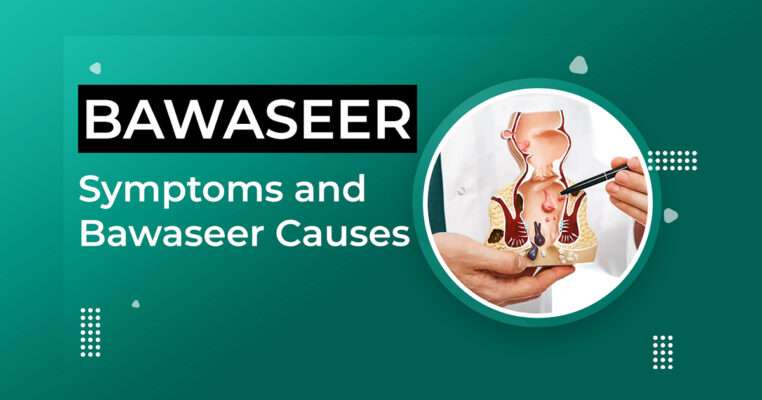
Piles are swollen veins inside or around your back passage (rectum and anus). Think of them like varicose veins — but inside your body, near your bottom. They can be internal (inside) or external (outside near the skin).
Now, here is something many people don’t realize. Not every hemorrhoid causes symptoms. In fact, many people have piles without even knowing it. But when they do cause problems — tab mushkil shuru hoti hai.
The most common symptoms I see in my patients are:
- Bright red blood on the toilet paper or in the toilet bowl after passing stool
- A feeling that your bowels are not fully empty even after going to the toilet
- Itching, burning or discomfort around the anal area
- A lump or swelling near the anus that may be painful — sometimes this is a skin tag (maqad ke skin tag) rather than an active pile
- Mucus discharge after passing stool
- Pain or discomfort when sitting for long periods
If these symptoms sound familiar, I have written a detailed guide on bawaseer ki 7 common alamat that explains each sign in Urdu — worth reading if you want to understand what exactly is happening in your body.
If yes — please do not ignore it. Rectal bleeding especially should never be ignored. In my opinion, any patient with fresh blood in stool should be examined properly. Sometimes it is just piles. But sometimes it can be something more serious, and only a proper examination can tell.
Types of Piles — Yeh Kitni Tarah Ki Hoti Hain?
Not all piles are the same. In clinical practice, we classify piles into four grades based on how severe they are. If you want a deeper explanation of what hemorrhoids actually are and how they develop, I recommend reading my article on hemorrhoids meaning in Urdu — bawaseer kya hai.
- Grade 1: Small swellings inside the anal canal. No prolapse. Patient often doesn’t even know they have it. Bleeding may occur.
- Grade 2: Larger hemorrhoids that may come out (prolapse) when you strain for stool, but go back in on their own.
- Grade 3: Prolapse during straining and have to be pushed back in manually. At this stage, patients are usually in significant discomfort.
- Grade 4: Permanently prolapsed outside. Cannot be pushed back in. Often require surgery.
Another important distinction many patients ask about is the difference between khooni (bleeding) and badi (external) bawaseer. These are actually two different types with different symptoms and management. I have explained this in detail in my article on difference between khooni and badi bawaseer — worth reading if you are unsure which type you have.
In my experience, most patients in Karachi come to me at Grade 2 or Grade 3 — when the problem has already become quite troublesome. Grade 1 patients usually self-medicate with creams and only visit when the condition worsens.
I have also noticed that people delay consultation because of embarrassment. And I completely understand that. But let me tell you — as a proctologist, this is what I do every single day. There is nothing uncomfortable for me about this examination, and I make sure my patients feel respected and at ease.
Why Do Piles Happen? (Wajuhaat Kya Hain?)
This is a question almost every patient asks me. And the honest answer is — usually it is a combination of factors, not just one thing.
The main causes I see in my Karachi patients are:
- Chronic constipation — qabz — this is the number one reason. Straining during bowel movements puts enormous pressure on the veins in your rectum. If constipation is a recurring problem for you, especially in winter, I have written a practical guide on constipation in winter — proven dos and don’ts that many patients have found helpful.
- Low fiber diet. A lot of Pakistani food, especially in urban settings, is low in fiber. Maida, processed foods, less vegetables — yeh sab contribute karta hai.
- Sitting for long hours. Office workers, drivers, people who sit all day are at higher risk.
- Pregnancy. The pressure of the growing baby on pelvic veins is a very common cause of piles in women.
- Family history. Yes, piles can run in families.
- Obesity and lack of physical activity.
- Frequent use of strong laxatives or suppositories without medical supervision.
For a more complete picture of all the causes, I have covered them in both English and Urdu in my article on causes of bawaseer in English and Urdu.
In my opinion, lifestyle changes alone can prevent piles from coming back — even after surgery. This is why I always spend time counselling my patients on diet and habits, not just operating on them.
Personalized Solutions for Piles, Fissures & Fistulas
Treatment Options for Piles in Karachi — What Works and What Doesn’t
Let me be very direct here. I have seen a lot — a LOT — of patients who wasted months and money on things that simply don’t work for advanced piles. So let me break it down properly.
1. Conservative Treatment (Non-Surgical)
For Grade 1 and early Grade 2 piles, non-surgical treatment can definitely help. This includes:
- High fiber diet and lots of water intake
- Sitz baths (sitting in warm water for 15 minutes twice daily — very soothing)
- Stool softeners and mild laxatives
- Topical creams and tablets to reduce swelling and itching — medications like Daflon are commonly used at this stage. If you want to understand how these work, I have a detailed guide on Daflon tablet uses and dosage.
But — and this is important — these methods only manage symptoms. They don’t remove the hemorrhoid permanently. So if you stop, symptoms often return.
2. Band Ligation for Piles
For Grade 2 and some Grade 3 hemorrhoids that have not yet reached the stage requiring surgery, rubber band ligation is an effective non-surgical option. It involves placing a tiny rubber band at the base of the hemorrhoid to cut off its blood supply. The pile then shrinks and falls off on its own within a few days. It is a quick clinic procedure with minimal recovery. I have also written about this in Urdu for patients who prefer to read in their own language: band ligation — hemorrhoids ke ilaj ka behtareen hal.
3. Traditional Open Surgery for Piles
The old way. Still used in many government hospitals and some private setups. It involves cutting out the hemorrhoid tissue. It works, but the recovery is painful and long — usually 4 to 6 weeks of discomfort, dressings, and restricted activity.
4. Laser Surgery for Piles — My Recommended Approach
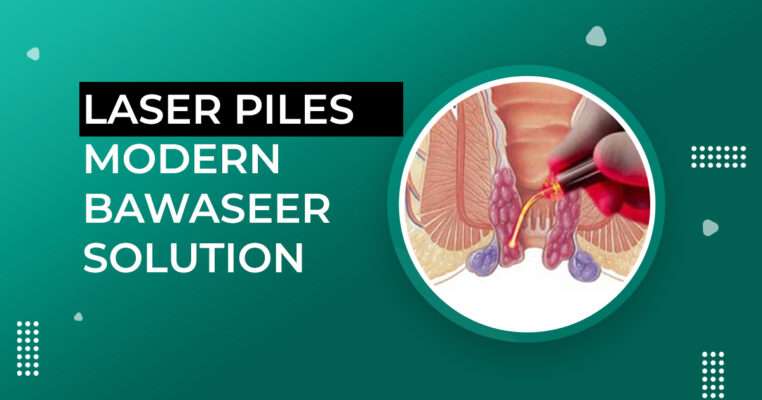
This is what I specialize in. Laser treatment uses a focused beam of light energy to shrink and seal hemorrhoid tissue from inside. No big cut. No stitches. No dressings afterward.
In my practice at Karachi Piles Clinic, I perform laser surgery as a day procedure — meaning most patients go home the same day. Recovery is dramatically faster than traditional surgery. I also have a dedicated guide on care after laser surgery for hemorrhoids that I recommend every patient reads before and after their procedure.
Laser Surgery vs Traditional Surgery — Side by Side
| Factor | Traditional Open Surgery | Laser Surgery |
|---|---|---|
| Cut / Incision | Yes — surgical cut required | No cut involved |
| Post-op Pain | Significant — can last weeks | Minimal to none |
| Recovery Time | 4 to 6 weeks | 3 to 7 days |
| Bleeding Risk | Higher | Very low — laser seals vessels |
| Dressing / Follow-ups | Required for weeks | Not needed |
| Hospital Stay | Usually 1 to 2 days | Day case — home same day |
| Infection Risk | Present | Almost zero |
| Return to Work | 3 to 6 weeks | 2 to 5 days |

Yeh table dekh ke bhi agar koi doubt hai — feel free to call and ask. I have no issue with patients asking a lot of questions. Good questions lead to good decisions.
Conditions I Treat at Karachi Piles Clinic
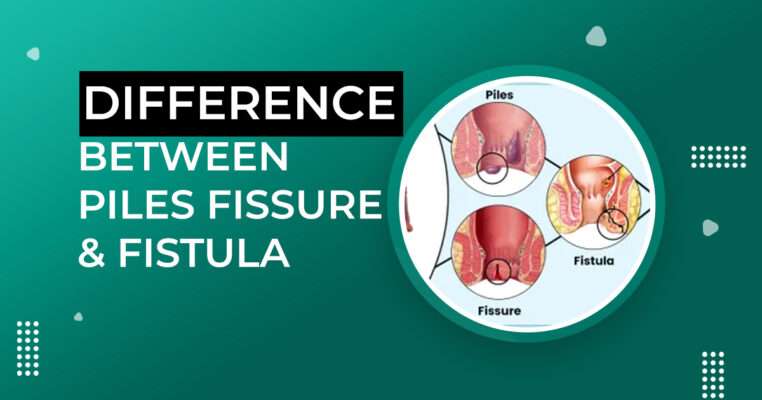
At my clinic — Karachi Piles Clinic — I treat all perianal (around the anus) conditions using laser and minimally invasive methods. The three most common are:
Piles / Hemorrhoids (Bawaseer)
The most common condition I see. Laser treatment gives excellent results for Grade 2, 3, and even 4 hemorrhoids. No cut, quick procedure, same-day discharge in most cases.
Anal Fissure
A fissure is a small tear in the lining of the anal canal — usually caused by constipation and passing hard stool. It causes sharp pain during and after passing stool, sometimes with bleeding. In my experience, laser treatment for fissure gives immediate relief with no post-operative pain and no dressing required at all. Patients are usually amazed at how simple the recovery is.
Anal Fistula (Bhagandar)
This is the most complex of the three conditions. A fistula is essentially a tunnel-like track that forms between the inside of the anal canal and the skin outside. Traditional surgery for fistula involves a large cut and 6 to 8 weeks of healing — which is why so many patients delay treatment. Laser surgery for fistula has completely changed this. The procedure is minimally invasive and recovery is dramatically faster.
What Happens When You Visit Me?
I know many people are nervous about their first visit to a proctologist. So let me walk you through what to expect.
First, we sit and talk. I listen to your symptoms, your history, how long this has been going on. Then comes a brief examination — I know it sounds uncomfortable but it takes only a few minutes and I make sure you are comfortable throughout.
Based on the examination, I tell you clearly what you have — Grade 1, 2, 3, or 4 — and what treatment I recommend for you. I give you all the options, the cost, the recovery time. No pressure. No rush.
In my opinion, informed patients have better outcomes. When you understand your condition and your treatment, you cooperate better, recover faster, and your results are much better.
Piles Treatment Cost in Karachi
Let me give you real numbers — no vague answers.
Consultation fee: Rs. 1,500 to Rs. 2,500
Conventional piles surgery: Rs. 50,000 to Rs. 80,000 (depending on grade and hospital)
Laser piles surgery: Rs. 100,000 to Rs. 150,000 (depending on severity)
Yes, laser surgery costs more. But think about it — shorter hospital stay, no dressing costs, back to work in days instead of weeks. In many cases the total cost difference is not as big as it first appears. And the comfort difference is enormous.
These prices include initial consultation and prescribed medications. Hospital fees, anesthesia charges, and follow-up visits may vary slightly.
Why Patients Choose Me as Their Piles Doctor in Karachi
I am not saying this to just promote myself — but I think it’s fair that you know what makes my approach different.
I am an MBBS, FCPS (Fellowship of College of Physicians and Surgeons Pakistan) qualified surgeon. I was among the first surgeons in Pakistan to introduce laser proctology — treating piles, fissures and fistulas with laser rather than conventional open surgery. That is why people call me Pakistan’s first laser proctologist.
In my 16+ years of practice I have:
- Performed over 10,000 successful proctology operations
- Treated patients from all major cities of Pakistan
- Treated complex Grade 4 hemorrhoids and high anal fistulas that others had refused to operate
- Maintained a very high success rate with laser procedures — including no recurrence in the majority of patients
But more than the numbers — I genuinely care about my patients. I take time with every consultation. I explain things in simple Urdu when needed. And I follow up properly after surgery. Yeh mera apna experience hai — aur mujhe is par fakhr hai.